Find the best baby care play mat for tummy time and floor play, plus Costco options, safety tips, materials, and buying advice.
A baby care play mat gives your little one a soft spot for tummy time, rolling, and floor play. I like using one in the living room, where the baby can play while I stay close by. But picking the right mat takes more than choosing a cute print. You need to think about safety, size, grip, comfort, and cleaning. In this guide, I’ll show you what to look for and how to find a mat that fits your baby and home.
What Is a Baby Care Play Mat?
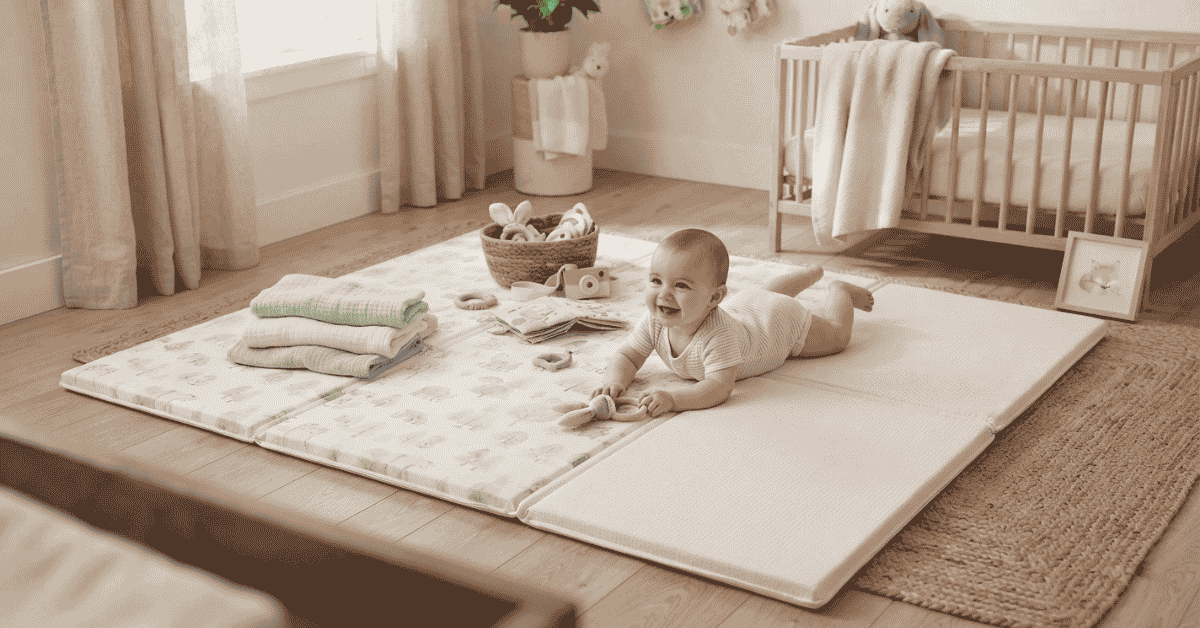
A baby care play mat gives your little one a clean, soft spot for tummy time, rolling, crawling, and floor play. The right mat feels comfy under tiny hands and knees. It is also easy for parents to wipe down after messy play.
What Is a Baby Care Play Mat Used For?
A play mat serves as a safe base for your baby’s daily activity. Main uses include:
-
Tummy time: Helps build neck, shoulder, and core strength.
-
Rolling and reaching: Gives babies room to stretch for toys.
-
Early crawling: Offers extra grip for tiny knees and feet.
-
Sitting and floor play: Cushions small tumbles as babies learn to sit up.
-
Toy play: Keeps toys off dirty carpets or cold hard floors.
-
Sensory activities: Gives a clean space for mirrors, rattles, and textures.
-
Travel play space: Provides a familiar spot at home or when visiting family.
Remember that a play mat is strictly a play surface. It is not designed for infant sleep.
Why Parents Put One on the Floor
A play mat creates a clean, defined zone just for your baby. It keeps them off cold hardwood or dusty carpets. It cushions minor bumps and protects your rugs from spit-up.
Picture a quiet, sunny morning in your living room. You lay the mat out near the sofa and set down two soft rattles. You place your baby on their tummy. Over the next twenty minutes, you watch as they kick their feet, reach out, and work out how to roll over toward the bright red rattle for the first time. It is a simple tool, but it makes floor play easy and comfortable for everyone.
What Should a Good Baby Care Play Mat Include?
A great mat does not need endless gadgets. Focus on comfort, grip, size, cleaning, and soft materials.
Soft but Supportive Surface
-
Cushioned feel: Needs enough padding to soften hardwood floors.
-
Firm core: Must be firm enough so tiny hands do not sink too deep during tummy time.
-
Joint comfort: Soft under delicate elbows and knees.
-
Flat surface: Avoids large gaps or loose seams that catch small fingers.
If a surface is too soft or unstable, your baby will struggle to push up or crawl.
Easy-to-Clean Material
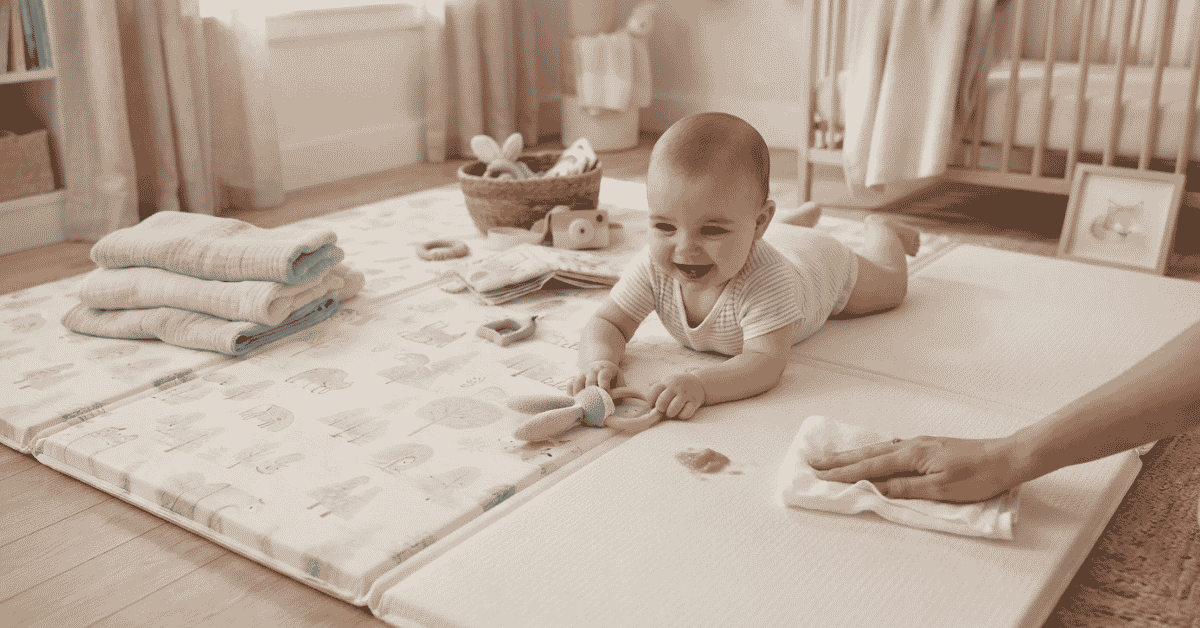
Babies create messy surprises. Look for:
-
Waterproof finish: Keeps drool and milk from soaking into the foam.
-
Wipe-clean top: Lets you clean spills in five seconds with a damp cloth.
-
Sealed edges: Prevents liquids from seeping inside the core.
-
Washable covers: Helps if you choose a fabric mat.
-
Low-maintenance design: No complex nooks where crumbs hide.
You will deal with spit-up, spilled formula, smashed banana, and mysterious spots that pop up right after you finish cleaning. A waterproof mat saves your sanity.
Good Size and Grip
-
Mat dimensions: Match the mat size to your actual floor space.
-
Non-slip backing: Keeps the mat firmly in place on wood or tile.
-
Easy storage: Folds or rolls up fast when play time ends.
-
Durable edges: Firm borders that will not peel or tear easily.
Measure your room before buying so you know it fits comfortably.
What Is the Safest Play Mat for Babies?
Safety comes long before pretty colors. A mat can look great in photos but still pose risks if it slides, tears, or gets misused.
Check the Intended Age and Use
-
Read the maker’s age recommendations.
-
Check all warning tags and manual rules.
-
Verify mat dimensions and thickness.
-
Confirm the mat is rated strictly for floor play.
Play mats, infant support cushions, changing pads, and crib mattresses are all distinct product categories. The Consumer Product Safety Commission (CPSC) cautions that infant support cushions should never be used for sleep and should only be used on the floor while an adult is watching.
Look for Safe Construction
-
No loose puzzle pieces that fit in a baby’s mouth.
-
No exposed foam that a baby could bite off.
-
Smooth, rounded corners with no sharp plastic edges.
-
Strong seams that hold up to pulling.
-
A stable surface that will not bunch up.
Avoid Using a Play Mat for Sleep
This is a critical safety rule. A padded play mat is never a substitute for a crib or bassinet. The CPSC states that the safest sleep space for a baby is a bare, firm, flat surface built specifically for infant sleep. If your baby drops off to sleep on their mat, move them right away to their crib or bassinet.
What Is the Best Floor Play Mat for Babies?
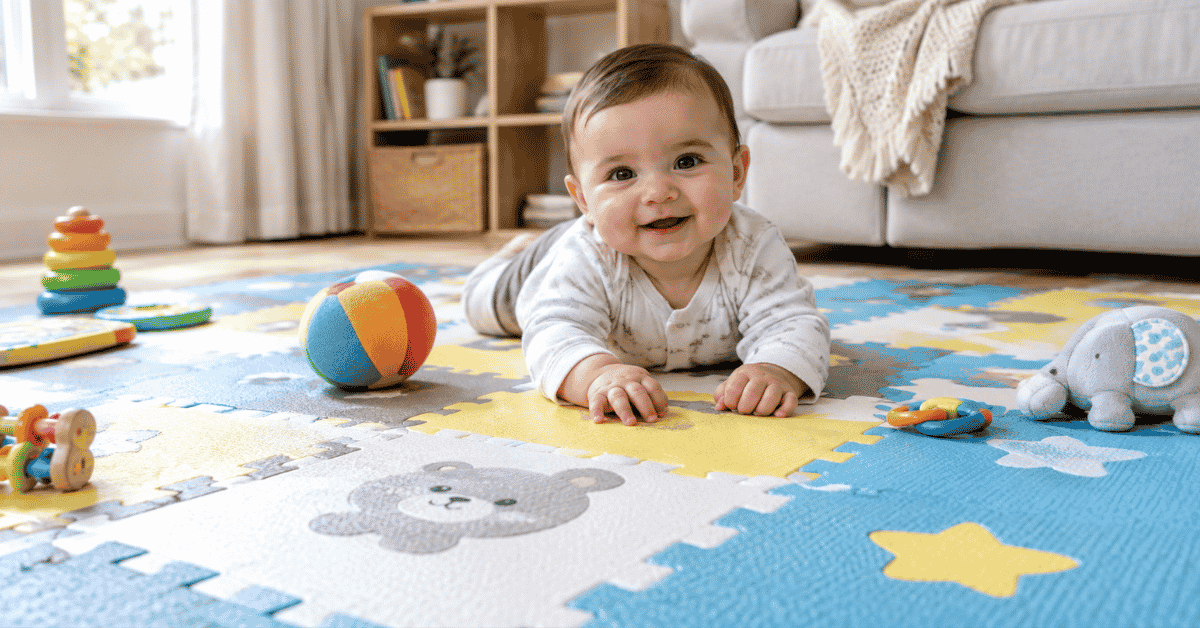
The right mat depends on your home layout and how your baby moves.
Best for Tummy Time
-
Flat, smooth surface for easy balancing.
-
Gentle cushioning for chest support.
-
Room for babies to turn their heads safely.
-
Wipe-clean top for frequent drool.
Best for Crawling Babies
-
Extra large play zone for free movement.
-
Strong non-slip base for quick pushes.
-
Tough surface that resists scuffs.
-
Sealed seams to withstand heavy daily use.
Best for Small Homes and Travel
-
Accordion fold or roll-up design.
-
Lightweight materials.
-
Sturdy carrying handles or travel bag.
-
Compact profile for closet storage.
When play time ends, you can fold the mat up and slide it next to the sofa. You get your living room back instead of leaving your house looking like a daycare center.
Baby Care Play Mat Costco: Is It Worth Checking?
Costco is popular for buying large baby items at good prices. However, stock and pricing change often, so check current listings online or in-store before heading out.
Why Costco Can Be Appealing
-
Generous sizes that cover large playroom floors.
-
Bundled accessories or reversible designs.
-
Competitive member pricing per square foot.
-
Easy in-store pickup or home delivery.
-
Hassle-free return policies.
What to Check Before Buying
-
Exact mat dimensions and total floor coverage.
-
Foam thickness and softness.
-
Cleaning rules (wipe down vs. cover washing).
-
Ease of folding or storage.
-
Age suitability and safety labels.
Do Not Buy It Only Because It Is a Costco Deal
The lowest price per square foot is not always the smartest buy. A massive mat that takes twenty minutes to clean or fold can quickly become a chore. A smaller mat that wipes clean in seconds and folds up easily often gets much more use.
Which Materials Are Best for a Baby Play Mat?
Babies spend hours pressing their skin against the mat surface, so material choices matter.
Foam Play Mats
-
Provide thick, supportive cushioning.
-
Lightweight and easy to move around.
-
Popular in interlocking puzzle tile formats.
-
Note: Moisture can seep between puzzle seams if spills are left unattended.
Foldable and Fabric Mats
-
Folds down fast for quick storage.
-
Soft fabric tops feel warm under skin.
-
Often machine-washable for easy care.
-
Fabric tops can absorb liquids if they lack a waterproof layer.
What About “Non-Toxic” Baby Mats?
Marketing claims like “non-toxic,” “natural,” or “eco-friendly” are common. Do not rely on loose buzzwords alone. Check for clear material details from the manufacturer, such as BPA-free, lead-free, and phthalate-free testing. Look for clear safety compliance labels rather than trusting marketing claims alone.
How to Clean and Care for a Baby Care Play Mat
Dust, crumbs, and spit-up build up fast. A simple routine keeps your mat fresh.
Daily Quick Clean
-
Clear away toys and shake off loose crumbs.
-
Wipe up liquid spills right away.
-
Clean the surface using warm water and mild dish soap.
-
Allow the mat to air-dry completely before folding or reusing.
Deep Cleaning
-
Follow the manufacturer’s care instructions carefully.
-
Machine wash fabric covers on gentle cycles if allowed.
-
Clean along seams and folds where dirt collects.
-
Avoid harsh bleach or abrasive scrubbers unless approved.
Inspect the Mat Often
Check your mat weekly for:
-
Cracks or peeling surface layers.
-
Tears in the outer foam.
-
Loose, biteable foam pieces.
-
Frayed edges or broken seams.
If a foam mat begins to tear or peel, replace it immediately to prevent your baby from pulling off small pieces.
How to Set Up a Baby Care Play Mat Safely
A safe setup makes floor play relaxing for everyone.
Pick a Flat Floor Area
-
Lay the mat on a flat, level floor.
-
Keep the area well away from stairs and doorways.
-
Ensure clear visibility from around the room.
-
Keep electrical cords, blinds, and heavy decor out of reach.
Keep the Play Area Simple
Do not crowd the mat with heavy toys. Choose:
-
Soft fabric rattles and rings.
-
Silicone teething toys.
-
High-contrast visual cards.
-
Unbreakable baby-safe mirrors.
-
Soft board books.
Stay Nearby
Active adult supervision is essential. Once babies start rolling and crawling, they move faster than expected. Stay within arm’s reach while your baby plays.
How to Choose the Right Baby Care Play Mat
Ignore cute patterns for a moment and focus on practical features.
Quick Buying Checklist
-
[ ] Correct age guidance for your infant
-
[ ] Approved specifically for floor play
-
[ ] Non-slip backing for floor stability
-
[ ] Waterproof or easy-to-wipe surface
-
[ ] Sized correctly for your room
-
[ ] Firm, supportive cushioning
-
[ ] Strong seams and durable edges
-
[ ] Clear manufacturer safety details
-
[ ] Folds or rolls up for easy storage
Match the Mat to Your Baby’s Stage
-
Newborn: Needs gentle cushioning for tummy time and supervised floor play.
-
Rolling baby: Requires open space without raised edges that stop movement.
-
Sitting baby: Needs a stable surface to cushion balance wobbles.
-
Crawling baby: Demands a large, non-slip area with high durability.
Baby Care Play Mat FAQs
What is the safest play mat for babies?
The safest play mat is a firm, stable floor mat built from non-toxic materials with a non-slip backing. It should have no small loose parts, tears, or sharp edges. Always use it on the floor under active adult supervision, never for infant sleep.
What is the best floor play mat for babies?
The best mat fits your room, cleans up easily, and offers firm support for your baby’s stage. Large foam or foldable mats work great for playrooms, while compact fold-up mats suit smaller spaces.
Is a Costco baby care play mat worth buying?
It can be a great value if you need a large, durable mat for a dedicated playroom. Compare the mat’s size, material quality, and cleaning rules against your daily space before buying.
Are foam play mats safe for babies?
Yes, as long as the foam is solid, undamaged, and free of small detachable parts. Check foam mats regularly for tears or bite marks, and discard any damaged mats right away.
Can a baby sleep on a play mat?
No. A play mat is designed for active floor play, not infant sleep. The CPSC recommends placing sleeping babies on a bare, firm, flat surface like a crib, bassinet, or play yard.