In US clothing, a common starting point is to go up one size when changing from juniors to women’s clothing. For example, a juniors size 7 may fit like a women’s size 4, while a juniors size 9 may fit like a women’s size 6. This is only a general guide because brands, garment cuts, and body measurements can change the fit.
Shopping for clothes in the United States can get confusing when a size that fits in the juniors section does not fit the same way in the women’s section. A juniors size 5 dress, for example, may have a different waist, bust, or hip fit from a women’s size 5 dress. The number on the tag is only part of the story.
The main difference is that juniors clothing often uses odd-numbered sizes and is cut for a younger, narrower shape. Women’s clothing often uses even-numbered sizes and may allow more room through the bust, waist, or hips. These are common patterns, not fixed rules for every brand.
This guide explains how to convert junior size to womens clothing sizes in the US. You will find a simple conversion chart, measurement tips, examples for dresses and jeans, and advice for shopping online. Use the chart as a starting point, then check the brand’s size guide before you buy.
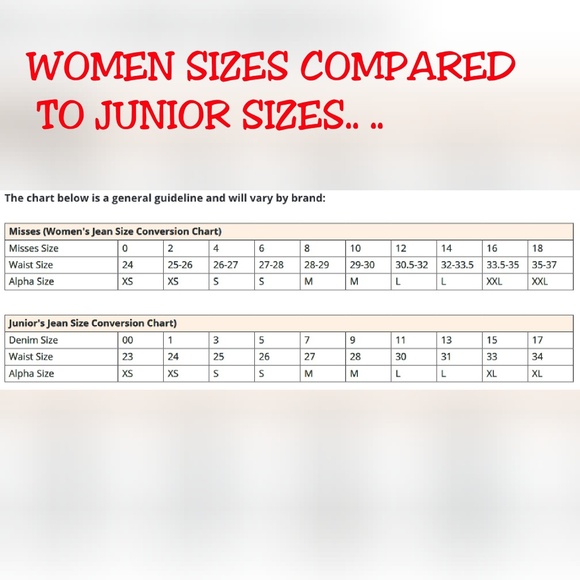
The chart below gives a rough US conversion for common juniors and women‘s clothing sizes. It is intended for everyday shopping, not as a guaranteed match for every brand or garment.
Juniors sizes commonly use odd numbers, while women’s sizes often use even numbers. Because each company sets its own measurements, the numbers do not follow one universal conversion rule. Use the closest size as a first guess, then compare your measurements with the item you want.
Source: fity.club
Juniors size 1
A women’s size 0 or 00 may be a starting point, depending on the brand and garment.
Juniors size 3
A women’s size 0 or 2 may be worth checking against the brand’s measurements.
Juniors size 5
A women’s size 2 or 4 may be a reasonable place to start.
Juniors size 7
A women’s size 4 is a common rough comparison, although some cuts may fit differently.
Juniors size 9
A women’s size 6 may be a useful starting point.
Juniors size 11
A women’s size 8 may be a useful starting point.
Juniors size 13
A women’s size 10 may be worth checking, especially for jeans and pants.
Juniors size 15
A women’s size 12 may be a rough comparison, but garment measurements matter.
Juniors size 17
A women’s size 14 may be a starting point where both size ranges are offered.
Juniors size 19
A women’s size 16 may be worth checking if the brand carries both sizes.
Quick Conversion Table
Use this table to compare common US size labels. The women’s size column shows a general estimate, not an exact measurement match. A brand may place the same body measurements under a different size number.
Juniors 1
Estimated women’s size 0 or 00.
Juniors 3
Estimated women’s size 0 or 2.
Juniors 5
Estimated women’s size 2 or 4.
Juniors 7
Estimated women’s size 4.
Juniors 9
Estimated women’s size 6.
Juniors 11
Estimated women’s size 8.
Juniors 13
Estimated women’s size 10.
Juniors 15
Estimated women’s size 12.
Juniors 17
Estimated women’s size 14.
Juniors 19
Estimated women’s size 16.
Why the Chart Is Only a Starting Point
US clothing sizes are not fully standardized across retailers. One brand’s size 6 can have different bust, waist, and hip measurements from another brand’s size 6. A relaxed top and a fitted dress may also fit very differently, even when both carry the same size label.
For this reason, do not assume that every juniors size converts to one exact women’s size. If your measurements fall between two sizes, look at the fabric stretch, garment cut, and fit notes before deciding.
Brand measurements
Use the chart for the exact item or clothing line you plan to buy.
Garment style
A slim-fit top may need a different size from a loose blouse.
Fabric stretch
Stretch fabric may fit differently from rigid cotton or denim.
What Is the Difference Between Juniors and Women’s Sizes?
Juniors and women’s clothing use different sizing systems and may have different cuts. Juniors clothing is often designed with a straighter shape and a closer fit through the waist and hips. Women’s clothing may offer more room in the bust, hips, or waist, depending on the brand and style.
The terms describe clothing categories, not a rule about who can wear each item. Adults can wear juniors clothing, and teens can wear women’s clothing. The right choice depends on body measurements, comfort, personal style, and the way a garment is made.
Source: officialbandshirts.com
Numbering
Juniors clothing often uses odd-numbered sizes, while women’s clothing often uses even-numbered sizes.
Shape
Juniors cuts may be narrower or straighter. Women’s cuts may offer more room in certain areas.
Length
Some juniors tops, dresses, and pants are shorter, but length depends on the design.
Fit
The same size number can feel different across categories and brands.
Juniors Clothing Is Not the Same as Kids’ Clothing
Juniors clothing is generally intended for older teens and young adults. It uses clothing sizes such as 3, 5, 7, 9, and 11. Kids’ clothing often uses age-based labels or numbered children’s sizes, which follow a different sizing system.
A juniors size 7 is therefore not the same as a children’s size 7. Check whether the label says juniors, girls, youth, or women’s before using a conversion chart.
Juniors
Often uses odd-numbered apparel sizes.
Women’s
Often uses even-numbered apparel sizes, plus sizes, or letter sizes such as XS and S.
Children’s
May use age ranges, height ranges, or children’s numbered sizes.
Why the Same Number May Fit Differently
A size number does not tell you every detail about a garment. The shoulder width, sleeve length, rise, waist placement, and hip room can all change the fit. Two tops in the same labeled size may feel quite different when worn.
The best comparison uses actual body measurements and, when available, garment measurements. This matters most for fitted clothes, structured jackets, non-stretch denim, and online orders.
Check the cut
Look for slim, relaxed, straight, curvy, or oversized fit notes.
Check the fabric
Stretch blends often behave differently from firm woven fabrics.
Check the intended fit
A fitted dress should not be judged by the same standards as an oversized sweatshirt.
How to Convert Your Junior Size to a Women’s Size
The most reliable way to convert junior size to womens clothing is to start with your current measurements. A size chart can narrow your options, but measurements help you avoid buying a size that is too tight or too loose.
Use a soft measuring tape and measure over light clothing. Keep the tape level and snug without pulling it tight. If you do not have a measuring tape, you can use a piece of string and compare it with a ruler.
Source: charlenesstyle.com
Measure your bust
Wrap the tape around the fullest part of your bust. Keep the tape level across your back.
Measure your waist
Measure around your natural waist, usually the area above the belly button and below the rib cage.
Measure your hips
Measure around the fullest part of your hips and seat, keeping the tape level.
Compare your results
Match your measurements to the chart supplied by the clothing brand.
Step 1: Start With a Size That Already Fits
If you already own a juniors dress or pair of jeans that fits well, check its size label. Use that label as your starting point, not as proof that every garment in the same size will fit.
Think about what fits well in the item you own. If the waist fits but the hips feel tight, a different women’s cut may work better than simply choosing a larger number.
Keep the label
Record the brand, size, and style name if you plan to shop for similar clothes.
Notice the fit
Check the shoulders, bust, waist, hips, and length.
Step 2: Use the Brand’s Size Chart
Open the size chart on the retailer’s product page. Find the chart for the correct category, such as juniors dresses, women’s jeans, or women’s tops. Do not use a general chart if the brand provides a chart for the exact product.
If your measurements fall across two size rows, read the fit guidance. A top may need to fit your bust and shoulders, while pants may depend more on your waist, hips, and rise.
Match the category
Use the women’s chart for the item you plan to buy, not a men’s or children’s chart.
Read the notes
Check whether the item runs small, has stretch, or uses a relaxed fit.
Step 3: Check Garment Measurements
Some retailers list the garment’s own measurements rather than body measurements. These numbers describe the clothing itself and may include room for movement or a planned loose fit.
If you already own a similar garment, lay it flat and measure it at the same points. Compare the results with the product details, while allowing for differences in fabric and design.
For tops
Compare chest width, shoulder width, sleeve length, and total length.
For pants
Compare waist width, hip width, rise, inseam, and leg shape.
For dresses
Compare bust, waist, hip, and total length.
Step 4: Decide Between Two Sizes
If your measurements sit between two sizes, use the fit you want and the fabric to make the final choice. A non-stretch dress may need more room than a stretchy top. A loose sweatshirt may offer enough space without sizing up.
For online shopping, read the return policy before ordering. When possible, compare two sizes in the same item if returns are allowed and the cost is acceptable.
For a close fit
Choose the size whose chart best matches your measurements, provided the garment has enough room to move.
For a loose fit
Check the listed garment measurements before going up a size.
For rigid fabric
Pay close attention to the waist, hips, bust, and shoulder measurements.
Junior Size to Women’s Sizes for Tops and Shirts
Tops need a close look at the bust, shoulders, and length. A juniors top may feel narrow across the chest or shorter through the body compared with a women’s top. The difference depends on the cut, so a simple size-number conversion may not solve every fit problem.
A juniors medium and a women’s medium are not guaranteed to have the same measurements. Letter sizes such as XS, S, M, L, and XL also vary between brands. Check the product chart before relying on the letter alone.
Source: inspiredbuffalo.com
Fitted shirts
Compare bust and shoulder measurements first.
Button-down shirts
Check the bust, shoulder seams, sleeve length, and space across the back.
Sweatshirts
Consider the intended loose fit and the length of the sleeves and body.
Cropped tops
Check the listed body length because the crop may be part of the design.
How to Choose a Women’s Top From a Juniors Size
Start with the size of a juniors top that fits your body well. Compare your bust and shoulder measurements with the women’s top chart. If the women’s garment has a different cut, look at its shape and length before choosing a size.
Do not size up automatically if you only want more length. A larger size can add width as well. A tall fit or a longer-cut style may suit you better if length is the main concern.
If the chest feels tight
Compare the bust measurement and check whether the fabric stretches.
If the shoulders feel tight
Look for a wider shoulder measurement or a different cut.
If the top is too short
Check body length or look for a longer style instead of relying only on size.
Junior Size to Women’s Jeans and Pants
Jeans and pants need more than a number conversion. Waist size, hip room, rise, inseam, and leg shape all affect comfort. A juniors size 9 may be a starting point for a women’s size 6, but that does not guarantee the waistband or hips will fit.
The rise is the distance from the crotch seam to the top of the waistband. Low-rise, mid-rise, and high-rise pants sit at different places on the body. That difference can change how the waist measurement feels even when two pairs have similar labels.
Source: allconversioncharts.com
Waist
Check where the waistband is designed to sit and compare its measurement with your body.
Hips
Use the fullest hip measurement when the brand’s chart asks for it.
Rise
Compare the rise if your usual jeans feel too high or too low.
Inseam
Check the inside leg length to see whether the pants will reach your preferred point.
Stretch
Read the fabric details because rigid denim and stretch denim may fit differently.
Example: Converting Juniors Size 9 to Women’s Jeans
Suppose you wear juniors size 9 in a pair of stretch jeans. A women’s size 6 is a reasonable size to check first, based on a common conversion pattern. This is an example of how to use the chart, not a promise that the jeans will fit.
Next, compare the women’s size 6 waist and hip range with your measurements. Check the rise and inseam as well. If the waist matches but the hips do not, try another cut or use the brand’s measurement guidance rather than assuming the size number is wrong.
First check
Look at women’s size 6 if the general conversion matches your current juniors size 9.
Second check
Compare waist, hips, rise, and inseam with the product chart.
Final choice
Use the measurements and intended fit to choose the size.
What If Juniors Jeans Fit Better?
There is no need to switch clothing categories just because you are shopping as an adult. If juniors jeans fit your waist, hips, and leg length well, they may remain a practical option. Women’s jeans may offer more choices in rise, length, and body shape, but the exact range depends on the retailer.
The best pair is the one that feels comfortable when you sit, walk, and bend. Check that the waistband does not dig in and that the fabric does not pull sharply across the hips or thighs.
Keep what works
A familiar juniors size can be a useful reference when shopping for a similar cut.
Try a different cut
Straight, relaxed, curvy, and wide-leg styles can fit differently within the same size.
Junior Size to Women’s Dresses and Skirts
Dresses and skirts can need a different conversion from tops or pants because they cover more than one part of the body. A dress must fit the bust, waist, and hips, while a skirt mainly depends on the waist, hips, and length. The best size is the one that works for the garment’s main fit points.
A juniors size 7 dress may be worth comparing with a women’s size 4, but a fitted or structured dress may need a closer measurement check. A loose shift dress may be more forgiving than a fitted sheath dress. Fabric, lining, seams, and closures can all affect comfort.
Source: eminencebypetra.co.uk
Fitted dresses
Compare bust, waist, and hip measurements before ordering.
A-line dresses
Check the bust and waist first, along with the skirt’s intended shape.
Stretch dresses
Review the fabric blend and the brand’s fit notes.
Skirts
Compare the waistband, hip room, rise or waist placement, and skirt length.
Choosing a Size for a Fitted Dress
For a fitted dress, compare all three main body measurements with the women’s size chart. If your bust fits one size but your hips fit another, check whether the design has stretch or a forgiving skirt shape. A rigid dress with a zipper may need more precise sizing.
Do not choose a smaller size just because the waist measurement matches. The garment must also allow you to sit, walk, and move without pulling at the seams or closure.
Check the closure
A zipper or firm button panel may leave less room for adjustment than a stretch design.
Check the lining
A lined dress may feel less stretchy than its outer fabric suggests.
Check the length
Compare the listed dress length with your preferred hem position.
How Junior Letter Sizes Compare With Women’s Letter Sizes
Some clothing brands use letter sizes instead of numbered sizes. These labels include XS, S, M, L, and XL. A juniors medium is not guaranteed to match a women’s medium because each category and brand may use different body and garment measurements.
Letter sizes are useful for a quick comparison, but they are less precise than a chart with bust, waist, and hip measurements. This is especially true when moving between fitted juniors clothing and women’s clothing with a relaxed or tailored shape.
Source: poshmark.com
XS
Compare the brand’s measurements rather than assuming the same fit in both categories.
S
Check the bust, waist, and hip ranges if the garment is fitted.
M
Use the product chart to confirm how the brand defines medium.
L and XL
Check the brand’s size range and fit notes because grading can differ across categories.
Should You Size Up From Juniors Medium to Women’s Medium?
Not always. If your juniors medium fits well, a women’s medium may fit too, but the garment may have more room in some areas or a different shape. The correct choice depends on the item’s measurements and the fit you want.
If you are moving from a juniors medium fitted shirt to a women’s medium relaxed shirt, the difference may come from the cut rather than the size label. Compare measurements first, especially if you need the item to fit a uniform or dress code.
Use measurements
Compare the bust, waist, hips, and garment length.
Review the style
A relaxed medium can have more room than a slim medium.
Common Mistakes When Converting Junior Sizes
The biggest mistake is treating a clothing size number as a fixed measurement. US apparel sizes can vary by brand, fabric, fit, and product type. A conversion chart helps you narrow the options, but it cannot replace the chart for the actual item.
Another common mistake is using a shoe-size conversion for clothing. Junior apparel sizes and youth shoe sizes are separate systems. A juniors size 7 dress does not mean the same thing as a youth size 7 shoe.
Source: stepwithshoes.com
Assuming one universal chart
Use the retailer’s own chart because size labels can differ.
Ignoring body measurements
Measure your body and compare it with the chart’s stated measurement type.
Confusing clothing and shoe sizes
Check whether the item is apparel, footwear, or children’s clothing before converting.
Sizing up without checking length
A larger size can add width without giving the length you need.
Ignoring fabric
Stretch, lining, and fabric thickness can change how a garment fits.
Assuming the size label reflects age
Clothing size is based on a sizing system, not a reliable measure of a person’s age.
What to Do When the Conversion Does Not Work
If the first size you try does not fit, identify the exact problem before changing sizes. Tight shoulders call for a different check from a loose waist. A short inseam needs a length solution, not necessarily a larger waist size.
Review the product chart again and compare the measurement linked to the problem. If the item still does not suit your shape, try another cut or ask the retailer about garment measurements.
Too tight at the bust
Check the bust range, stretch, and shoulder width.
Too loose at the waist
Look for a different cut or a waistband with a suitable adjustment.
Too short
Compare the body length or inseam and look for a longer option.
Tight across the hips
Check hip measurements and consider a cut designed with more hip room.
Shopping Online for Women’s Clothes After Wearing Juniors Sizes
Online shopping works best when you compare the measurements for each item instead of ordering by the size you usually wear. Product pages may show a body-size chart, garment measurements, model details, and fit notes. Each can help, but make sure you know which measurements the numbers describe.
Customer reviews can offer clues about fit, but treat them as reports from other shoppers rather than a guarantee. People have different body shapes and fit preferences. Reviews are most useful when they mention the exact style, size purchased, and whether the garment felt tight, loose, short, or long.
Check the full product page
Look for the correct size chart, fabric details, fit notes, and garment measurements.
Read useful reviews
Give more weight to reviews that discuss the fit of the exact item.
Review return terms
Check the return window, shipping fees, and whether sale items can be returned.
Save your measurements
Keep a private note of your bust, waist, and hip measurements so you can compare them with future charts.
A Simple Online Shopping Checklist
Before placing an order, confirm the clothing category and open the size chart for the exact brand. Compare the measurements that matter most for the item. Then check the fabric, fit notes, and return policy.
If the retailer lists only a size label and gives no useful measurements, the fit is less certain. Consider contacting customer service for the garment measurements or choosing a seller with clearer sizing information.
Confirm the category
Make sure the chart is for juniors or women’s clothing as needed.
Compare measurements
Use the relevant body or garment measurements, not just the number.
Check the fabric
Look for stretch and lining details that may affect fit.
Check returns
Know the return terms before buying if the size is uncertain.
Junior Size to Womens: A Practical Way to Choose
For a quick estimate, start by comparing the junior size with a women’s size about one step higher in the common odd-to-even sequence. A juniors 5 may point you toward women’s 2 or 4, while a juniors 9 may point you toward women’s 6. These examples are only starting points because the size systems do not match exactly across brands.
For a more reliable result, use your body measurements and the retailer’s own chart. Check bust and shoulders for tops, waist and hips for pants, and all three main measurements for fitted dresses. The right size should fit the garment’s intended shape and allow normal movement.
For a quick guess
Use a general juniors-to-women’s chart to narrow the size range.
For a better fit
Compare your body measurements with the brand’s chart.
For an online order
Check the exact item, fabric, reviews, and return policy.
For a poor fit
Find the measurement causing the problem and consider a different cut instead of changing size blindly.
A Worked Example for a Juniors Size 11
Suppose a shopper wears juniors size 11 pants and wants to buy women’s jeans. A women’s size 8 is a reasonable first size to investigate under a common conversion pattern. The shopper should then compare the women’s size 8 waist and hip range with their own measurements.
If the waist matches but the jeans feel tight through the hips, the next step is to check the hip measurements and cut. A curvy or relaxed fit may work better than simply moving to a larger size. If the jeans are too long, compare inseam options instead of choosing a different waist size.
Starting size
Check women’s size 8 as an initial comparison for juniors size 11.
Measure
Compare waist and hip measurements with the product chart.
Refine the fit
Choose a suitable cut and inseam based on the actual fit issue.
Frequently Asked Questions
Q
What is a junior size 7 in women’s clothing?
A juniors size 7 is often compared with a women’s size 4 as a rough US clothing conversion. The exact fit depends on the brand, garment type, and measurements. Check the retailer’s chart before buying.
Q
Is a juniors size 9 the same as a women’s size 6?
A juniors size 9 may be close to a women’s size 6 in some clothing lines. It is not an exact match across all brands. Compare the bust, waist, and hip measurements for the item you want.
Q
Should I go up one size from juniors to women’s?
Going up one size is a common starting rule, but it does not work for every garment. Women’s clothing may have a different cut, and brands use different measurements. Use the product chart to confirm your size.
Q
Are juniors sizes smaller than women’s sizes?
Juniors clothing often has a narrower or straighter cut than women’s clothing, but this varies by brand and style. A juniors size may feel smaller in one area and similar in another. Measurements provide a better comparison than labels alone.
Q
How do I convert a juniors size to a women’s size without a chart?
Use the size of a juniors garment that fits well as a starting point, then compare your bust, waist, and hip measurements with the women’s item. A general chart may help you estimate a size, but it cannot confirm the fit of a specific product. If the retailer provides no measurements, ask customer service or choose an item with clearer sizing details.
✦ Wrapping Up
Conclusion
Converting junior size to womens clothing is easier when you treat the size chart as a guide rather than a strict rule. A juniors size 7 may be close to a women’s size 4, and a juniors size 9 may be close to a women’s size 6. These comparisons can help you begin, but they do not replace the measurements for the item.
The best fit depends on the brand, clothing type, fabric, and body shape. Check the correct size chart, compare your measurements, and pay attention to areas such as the bust, waist, hips, shoulders, and inseam. You can wear either category if the clothes fit well and feel comfortable.
💡 Key Takeaway
Measure your bust, waist, and hips, then compare them with the exact retailer’s size chart. Use the general conversion only to choose which sizes to check first.