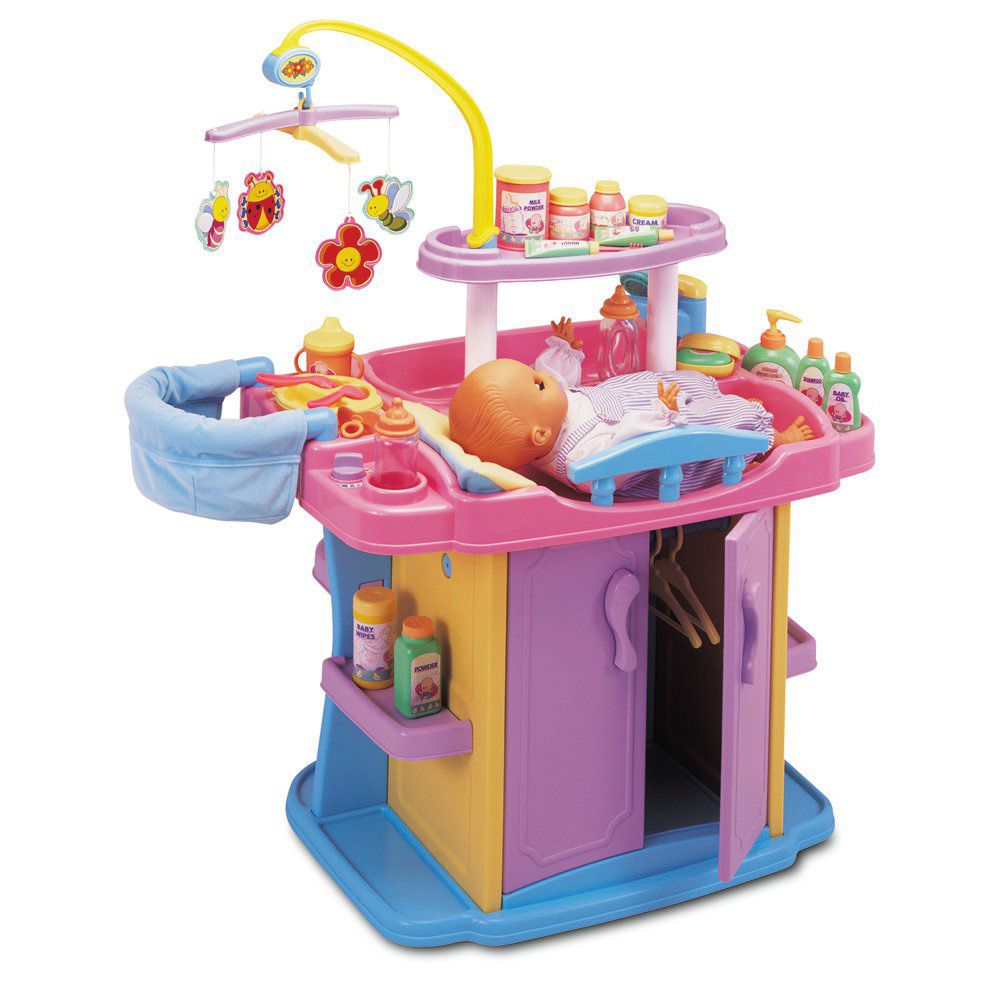
A baby care center toy is a pretend-play station where children can feed, bathe, change, dress, and care for toy dolls. It often includes a changing table, storage space, a pretend sink or bath, and small accessories. The best choice depends on the child’s age, available play space, interests, and the toy’s safety features.
Across the United States, families often look for toys that keep children busy while helping them learn through play. A baby care center toy can turn an ordinary playroom into a small doll nursery. Children can act out daily care tasks, make up stories, and practice simple routines with a favorite doll. It can be a useful gift for a birthday, a holiday, or a rainy afternoon at home.
These play stations vary in size and design. Some have a simple table for changing doll clothes, while others include a pretend bathtub, feeding area, shelves, and storage bins. A large set may offer more ways to play, but it also needs more floor space and more cleanup. Before buying one, check the suggested age, the parts included, the doll size it supports, and the space needed for safe play.
A baby care center toy is a play station made for caring for dolls or other pretend babies. It gives children a set place to change a doll’s clothes, pretend to feed it, prepare it for a bath, or tuck it in for sleep. The station acts like a small nursery, with play areas arranged around simple care tasks.
The term can describe several types of toys. A compact unit may have only a flat changing surface and a shelf. A larger model may have a pretend sink, bathtub, feeding seat, mirror, drawers, and hooks for accessories. Some sets focus on medical role play, while others look more like a home nursery.
These toys are different from activity centers made for real babies. An infant activity center is designed for a baby to sit, stand, or interact with attached play features, depending on its design. A doll care center is a pretend-play toy for children who care for a toy baby. The two products serve different users and should not be confused.
Source: constructiveplaythings.com
Changing station
A flat surface where a child can pretend to change a doll’s outfit or diaper.
Bath or sink area
A pretend wash area for bath-time stories. Some models use molded plastic tubs rather than real water.
Feeding area
A space for pretend meals with a toy bottle, bowl, spoon, or feeding seat when supplied.
Storage shelves
Small shelves, baskets, or drawers that give accessories a place when play ends.
Who Is This Toy For?
A baby care center toy may suit preschool-age children who enjoy dolls, family role play, or pretend household tasks. The correct age range depends on the exact product, its size, and the parts included. Always use the age label on the package rather than relying on a general age range for all doll stations.
Children who enjoy doll play
A care station gives doll lovers a place to act out familiar routines and create stories.
Children who like role play
Kids can pretend to be a parent, caregiver, nurse, or nursery helper.
Families looking for shared play
Two children can take turns feeding, dressing, or putting a doll to bed when the station has enough room.
Popular Features to Look For
The most useful features are the ones a child will use often. A changing table, a few storage spaces, and room for a favorite doll may be enough for a child who likes simple play. Extra parts can add more story ideas, but they can also increase the price, setup time, and amount of clutter.
Look closely at the layout before choosing a set. Some stations place the changing area beside a pretend bath, while others use a vertical design with shelves above the main surface. A child should be able to reach the main play areas without pulling on the unit or climbing to reach an accessory.
Do not assume that every care center comes with a doll, bottles, clothes, or bath items. Product photos may show accessories that are sold separately. Read the included-parts list and check whether the set works with dolls your child already owns.
Source: constructiveplaythings.com
Changing surface
Choose a surface that can hold the intended doll without forcing the child to balance it on a narrow edge.
Storage space
Shelves or bins help keep small accessories together and make cleanup easier.
Pretend bath
A molded tub adds bath-time play. Check whether the manufacturer permits water use before filling any part.
Accessory set
Bottles, brushes, diapers, and clothes may add variety, provided the parts suit the child’s age.
Easy-to-clean materials
Smooth surfaces that can be wiped with a suitable cleaner may be easier to maintain than fabric-covered areas.
Do Lights and Sounds Matter?
Lights, sounds, and moving parts can attract attention, but they are not required for meaningful pretend play. A simple station can inspire long stories when a child has a doll and a few safe accessories. If you choose an electronic set, check the battery compartment, follow the maker’s instructions, and keep loose batteries away from children.
Choose for play value
Look for features that support the child’s favorite stories instead of paying for effects they may rarely use.
Check battery access
Battery compartments should close as designed and remain secure during normal use.
How Pretend Play Can Help Children Learn
A baby care center toy gives children a way to copy routines they see at home or in books. They may pretend to change a diaper, prepare a bottle, wash a doll, or settle it for a nap. These small acts can become stories that help children explore daily life in a way they can control.
Play does not need to look like a real care routine to be useful. A child may give a doll a blanket, invent a name, or decide that the toy needs a trip to the doctor. Such stories can offer chances to use new words, practice turn-taking, and express ideas. Each child will play in a different way, and no toy can promise a fixed learning result.
Adults can support this play without directing every move. Ask an open question, name an object, or join a short scene when invited. Let the child choose what happens next. The goal is not to test the child but to give them room to think, speak, and create.
Source: dmzn2b8hkpq8b.cloudfront.net
Language skills
Words such as bottle, blanket, bath, hungry, sleepy, and gentle can appear naturally during play.
Fine motor practice
Handling doll clothes, fastening simple items, and placing accessories can exercise small hand movements.
Social skills
Shared play may offer chances to take turns, listen, cooperate, and agree on a story.
Imagination
Children can invent daily routines, make up problems, and decide how their pretend baby will respond.
Care and empathy
Pretending to comfort a doll may help children explore how people respond to another person’s needs.
Simple Play Ideas for Home
You do not need a long lesson plan to make the toy more engaging. Pick one easy story and let your child guide it. Use only accessories that are suitable for the child’s age, and keep real medicines, cosmetics, and household cleaning products out of the play area.
Get ready for the day
Ask the child to choose a doll outfit and pretend to prepare the baby for a walk.
Bath-time story
Use a dry pretend tub or the approved bath feature to act out a wash routine.
Pack a small bag
Let the child choose a blanket, toy bottle, and spare outfit for a pretend trip.
Bedtime routine
Help the doll get ready for sleep with pretend pajamas, a story, and a toy blanket.
How to Choose the Right Baby Care Center Toy
Start with the child’s age, interests, and play habits. A child who loves dressing dolls may use a changing station more than a unit with many electronic features. A child who enjoys bath-time stories may prefer a set with a molded tub and room for towels or pretend toiletries.
Next, measure the space where the toy will stay. A large nursery station may look appealing in a product photo but leave little room to walk or play in a small bedroom. Check the assembled dimensions, not only the size of the box. Think about where the toy will go when it is not in use.
Finally, compare the full cost. The listed price may cover only the station, while dolls and accessories may be extra. Include any extra items you plan to buy and consider how much storage they will need. A simpler set that gets used often may be a better fit than a large set with many unused parts.
Source: dmzn2b8hkpq8b.cloudfront.net
Age and development
Follow the product age range and look for parts that match the child’s current abilities.
Doll compatibility
Check the suggested doll size and whether the child’s current dolls fit the station’s changing or bathing areas.
Available floor space
Measure width, depth, and height. Leave room for the child to move around the unit safely.
Included accessories
Confirm which items come in the box and which must be purchased separately.
Cleaning needs
Consider how easily the surfaces can be wiped and whether the toy has hard-to-reach gaps.
Assembly and storage
Review the assembly directions and find out whether the unit can be moved or stored without taking it apart.
Compare Common Types of Baby Care Stations
The following comparison can help narrow the options. These are general toy types, not claims about a particular brand or model. Actual features, sizes, prices, and included parts vary by product.
Basic changing table
Best for children who mainly enjoy changing doll clothes. It usually needs less room, but may offer fewer play areas.
Nursery care center
May combine changing, feeding, and storage areas. It suits children who like several care routines and families with room for a larger unit.
Bath and care station
Focuses on pretend washing and bath-time stories. Check whether it is designed for dry play or permits limited water use.
Medical pretend-play station
Adds doctor-style role play, such as a pretend checkup. It may suit children who enjoy caring stories beyond daily nursery tasks.
A Simple Buying Checklist
Before you place an order, use this short list to catch common problems. It can also help when comparing two similar sets in a store.
Read the age label
Confirm the toy is intended for the child who will use it.
Inspect the parts list
Check for a doll, bottles, clothes, or other accessories if they matter to the play plan.
Measure the play area
Make sure the assembled station fits without blocking a doorway or walkway.
Review the safety details
Look for clear assembly instructions, stable support, and any relevant warnings.
Check the seller and return terms
Use a seller that provides clear product information and a practical way to address missing or damaged parts.
Baby Care Center Toy Safety Tips
Safety should come before extra features or appearance. Check the manufacturer’s age guidance, warnings, and assembly instructions before a child uses the station. A toy that is suitable for one preschooler may not be suitable for a younger child in the same home, especially when the set contains small accessories.
In the United States, toys intended for children are subject to applicable federal safety requirements. The U.S. Consumer Product Safety Commission provides guidance on toy hazards, recalls, and age-appropriate play. Buyers can use official recall information to check whether a specific product has been recalled, but a quick visual check cannot prove that a toy meets every safety requirement.
Build the station as directed and place it on a level floor. Do not let children climb on shelves, sit on a changing surface, or pull themselves up using the toy. If a part cracks, a fastener comes loose, or the station begins to tip, stop using it until the issue is fixed according to the manufacturer’s instructions or the damaged unit is replaced.
Source: i.pinimg.com
Watch for small parts
Small bottles, buttons, clips, and doll accessories can pose a choking risk for young children. Follow the age label and keep unsuitable pieces out of reach.
Check for damage
Look for sharp edges, cracks, loose parts, exposed screws, and broken hinges before play.
Use the toy on a stable floor
Keep it away from stairs and areas where a child could trip over it. Do not place it on an unstable table.
Secure the assembly
Use the supplied fasteners and follow the maker’s instructions. Do not improvise repairs that may weaken the structure.
Keep real care products away
Use pretend accessories only. Keep real medicine, skin products, and cleaning agents separate from children’s toys.
Supervise water play
If the maker allows water, supervise the child closely and empty the tub right after play. Never leave a young child alone near water, even in a small container.
How to Check for Product Recalls
If you already own a baby care center toy or plan to buy one secondhand, search the U.S. Consumer Product Safety Commission’s official recall database. Use the brand name, product name, model number, or other identifying details printed on the item or packaging. If a matching recall appears, follow the stated remedy and stop using the product when instructed.
Find the product details
Look for the manufacturer, model number, product code, and date information when available.
Read the full notice
Check that the recall matches the exact item and review the hazard and remedy described.
Contact the manufacturer if needed
Ask for clarification if the model cannot be identified or the notice does not clearly cover your item.
Setting Up a Doll Nursery at Home
A well-planned play area makes a baby care center easier to use and easier to tidy. Choose a spot with a level floor, good light, and enough room for a child to stand or sit beside the station. Keep the unit clear of doorways, heating equipment, and other areas where toys could create a hazard.
Place the most-used items within easy reach. A small bin can hold doll clothes, while a separate box can store bottles, brushes, and other accessories. Keep small parts sorted by set so they are less likely to get lost or mixed with toys meant for younger children.
A large room is not needed. A simple corner with a doll, a few outfits, and a changing station can support plenty of stories. If space is limited, choose a compact unit or a design with built-in storage rather than filling the room with extra furniture.
Source: dmzn2b8hkpq8b.cloudfront.net
Make a clear play zone
Leave open floor space beside the station so the child can move without bumping into furniture.
Sort accessories
Use labeled or clearly separated bins for clothes, feeding items, and bath accessories.
Keep the station reachable
Store frequently used items at a height the child can reach without climbing.
Set a cleanup routine
Ask the child to return accessories to their bins when the play session ends.
What If You Have Very Little Space?
A smaller setup can still work well. Choose a compact changing table or use a safe, flat play surface for doll care when the child is supervised. Keep accessories in one small container and store them away after use. Do not place a toy station where it blocks a walkway or where a child may be tempted to climb shelves to reach items.
Choose one main feature
A changing area may be enough if bath and feeding play can happen with a few separate accessories.
Use one storage box
A single container can keep the doll’s clothes and pretend care items together.
Rotate accessories
Keep some safe, age-appropriate items stored and bring them out later to refresh play without buying more toys.
Cleaning and Maintaining the Toy
Regular cleaning helps keep a doll care station ready for play. Dust, food crumbs, and marks can collect on the changing surface and in storage spaces. Follow the manufacturer’s care instructions because some finishes, stickers, and electronic parts may be damaged by excess water or strong cleaners.
For many hard plastic surfaces, a soft cloth with mild soap and water may be suitable if the product instructions permit it. Wipe the surface and let it dry before returning accessories. Do not soak the whole unit or spray liquid into battery compartments, speakers, switches, or joints.
Wash fabric doll clothes and blankets according to their labels. Clean small accessories separately and check for damage while doing so. Throw away or replace pieces that are cracked, sharp, badly worn, or too small for the child using them.
Source: constructiveplaythings.com
Wipe high-use surfaces
Clean the changing surface, handles, shelves, and pretend bath area as needed.
Dry before storage
Remove moisture before putting accessories back into bins to reduce the chance of odor or mold.
Protect electronic parts
Follow the product instructions for battery-powered features and never immerse electronic components in water.
Check fasteners
Review the assembly from time to time and tighten or replace parts only as directed by the manufacturer.
Store it with care
Keep the station in a dry area away from excess heat, and follow the maker’s directions if it needs to be disassembled.
When Should You Replace the Toy?
Replace the unit or stop using it if its structure is damaged, it repeatedly tips, sharp edges appear, or a required safety part is missing. A loose accessory may sometimes be replaced through the manufacturer, but a broken support or cracked load-bearing piece needs more care. Do not let a child use a damaged station while waiting for a repair.
Stop use after structural damage
Do not rely on tape or an improvised repair to support a broken frame.
Replace unsafe small parts
Remove cracked or broken accessories that may create sharp edges or loose fragments.
Follow recall instructions
If a product is recalled, use the remedy specified by the responsible manufacturer or safety agency.
Common Buying Mistakes to Avoid
A toy can look impressive online and still be a poor fit for a child’s needs. Product photos often show the station fully arranged with dolls and accessories, so buyers may assume every item is included. Check the package details before making a decision.
Another common mistake is choosing a set based only on size or the number of features. A large unit may be hard to fit into a bedroom, while a small child may struggle to reach its upper shelves. Think about how the child will use the station during normal play, not just how it looks in a display.
It is also easy to overlook the age label and the risks posed by small pieces. A toy that works for an older sibling may be unsuitable when a younger child can access it. Store small accessories securely and follow the manufacturer’s age and safety guidance.
Source: i.pinimg.com
Assuming the doll is included
Read the contents list and budget for a doll only if the set does not include one.
Ignoring assembled dimensions
Measure the available space before buying a large station.
Buying too many accessories
Start with the basics and add compatible items only if the child uses them.
Overlooking cleanup
Choose a setup that has a clear place for every small part.
Skipping safety checks
Review warnings, assembly directions, and recall details when relevant.
Is a More Expensive Set Always Better?
No. A higher price may reflect a larger structure, more accessories, licensed characters, or electronic features, but those details do not guarantee better play value. Compare the construction, age fit, available space, included parts, and the child’s interests. A simple station can be a sensible choice when it covers the play routines the child enjoys most.
Compare useful features
Focus on the parts the child is likely to use, not the longest feature list.
Consider long-term use
A flexible station that works with existing dolls and clothes may offer more value than a set with many special parts.
Frequently Asked Questions
Q
What age is a baby care center toy suitable for?
The suitable age depends on the exact model, its construction, and the accessories it includes. Many doll care stations are aimed at preschool-age children, but there is no single age range for every product. Read the manufacturer’s label and warnings before use. Small bottles, clips, and other accessories may be unsafe for children who still put objects in their mouths.
Q
Does a baby care center toy come with a doll?
Some sets include a doll, while others sell the station and accessories separately. Product images may show items that are not part of the package. Read the included-parts list and check the recommended doll size before buying. If you already own a doll, measure it and compare those measurements with the station’s play areas.
Q
Can children use real water in a doll care center?
Only use water if the manufacturer says the relevant part is designed for it. A molded bath may be intended for pretend play and may not be watertight. If water use is allowed, supervise the child closely, use only a small amount, and empty and dry the area after play. Never leave a young child alone near water.
Q
What is the difference between a baby care center toy and an infant activity center?
A baby care center toy is usually a pretend nursery where a child cares for a doll. An infant activity center is made for a real baby to interact with attached toys or activity features, according to the product’s design. They are not interchangeable. Follow the age, use, and safety instructions for the specific product.
Q
How do I clean a baby care center toy?
Follow the maker’s cleaning instructions first. If permitted, wipe hard surfaces with a soft cloth and mild soap solution, then dry them before putting accessories away. Keep water away from electronic parts and battery compartments. Wash fabric pieces according to their labels, and remove damaged accessories from play.
Q
Is a baby care center toy a good gift?
It can be a thoughtful gift for a child who enjoys dolls, pretend household tasks, and role play. Before buying, check the child’s age, interests, available room, and existing doll collection. A compact changing station may work better in a small home, while a larger nursery set may suit a child who likes several types of pretend care.
Q
How can I make a baby care center toy more fun without buying extra parts?
Use the doll and safe accessories you already have to create new stories. Pretend to prepare the baby for a walk, choose an outfit, pack a small bag, or act out a bedtime routine. A child can also name the doll and decide what it needs next. Avoid using real medicines, cosmetics, cleaning products, or unsuitable household objects as pretend accessories.
✦ Wrapping Up
Conclusion
A baby care center toy can give children a fun place to explore doll care, create stories, and practice everyday routines. The right set does not need every feature on the market. It needs to suit the child’s age, fit the play space, work with the dolls they enjoy, and provide a safe place for pretend play.
Before buying, check the age label, assembled size, included accessories, cleaning needs, and product safety information. Set up the station on a stable floor and make cleanup part of the play routine. With a few suitable accessories and room for imagination, even a simple doll nursery can offer many ways to play.
💡 Key Takeaway
Measure your available play space, check the child’s doll size and age range, and compare the included parts before choosing a baby care center toy. Once it arrives, assemble it as directed, inspect it for damage, and keep small accessories away from children who may choke on them.