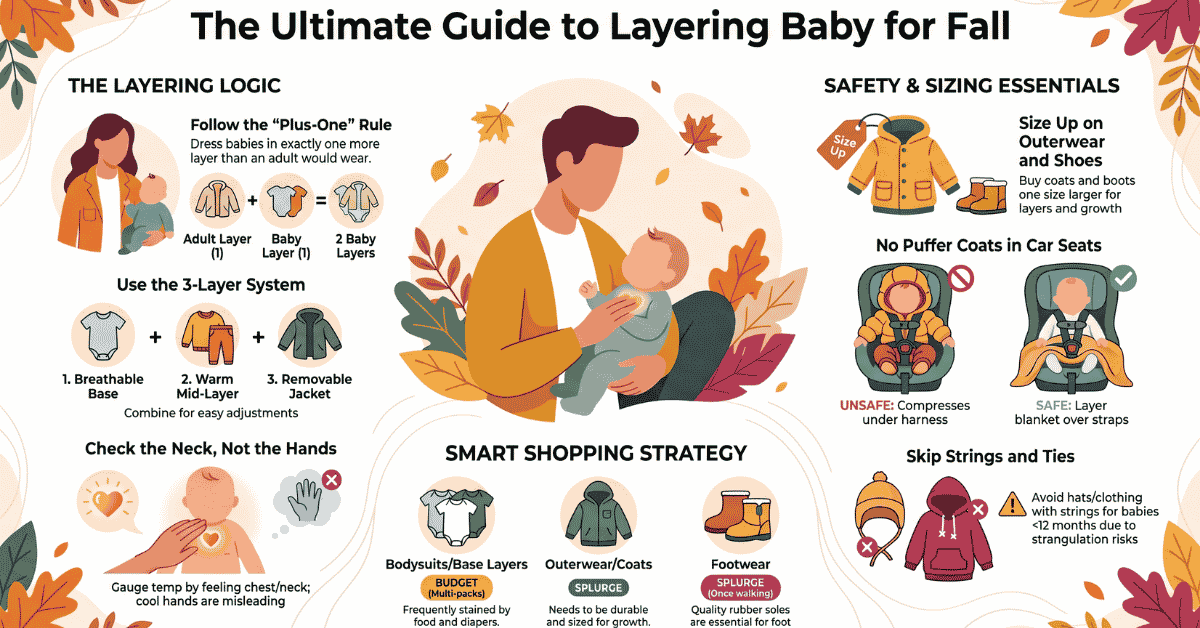
A baby needs one more layer than an adult in the same weather, not three. That’s the rule pediatricians actually give, and it’s the one most parents ignore when they load up on puffer coats in September.
The short answer: dress her in a breathable base layer, one warm mid layer, and a jacket she can shed the second she’s in the car seat or a heated store. Overheating is a bigger risk for infants than being slightly cold. Adjust by feel, not by outfit count.
Key Takeaways
- Dress babies in one more layer than an adult would wear, not two or three.
- Cotton bodysuits work as a base layer through most of fall; save fleece for temps under 50°F.
- Skip hats with strings or dangling ties for babies under 12 months; go with a snug knit cap instead.
- Buy footwear one size up if she’s cruising or walking, since fall boots run narrower than summer sandals.
- A 5-day rotation of 3 bodysuits, 2 pairs of leggings, and one cardigan covers most fall temperature swings.
- Size up on outerwear only, so she can wear a warm layer underneath without it being tight.
Fall outfit for baby girl by age
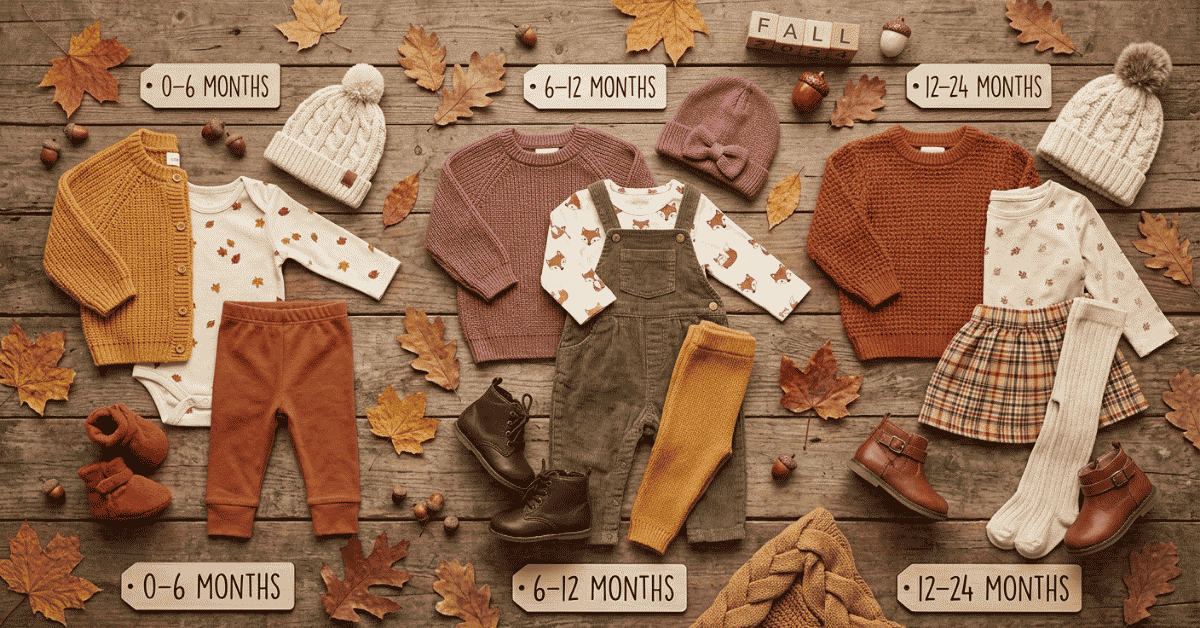
What she needs changes fast between newborn and toddler, and buying the wrong category wastes money by November.
| Age Group | Recommended Clothing Items | Base Layer Fabric | Mid/Outer Layer Recommendation | Footwear Needs | Safety & Sizing Tips | Ideal Temperature Range | |
|---|---|---|---|---|---|---|---|
| 0-6 months | Zip-up footed sleeper, long-sleeve bodysuit, swaddle sack, and lightweight cardigan for stroller walks | Cotton or bamboo | One warm mid layer and a removable jacket | Soft-sole booties or knit socks with grippers; no structured shoes | Use zippers instead of snaps; skip separates; avoid hats with strings/ties; buy outerwear one size up | 45°F to 65°F (General Fall) | [ |
| 6-12 months | Two-piece sets, leggings with long-sleeve tops, and corduroy or French terry overalls over bodysuits | Cotton or bamboo; cotton interlock/jersey for temperatures above 55°F | Knit cardigan or fleece vest; fleece or French terry for temperatures below 50°F | Soft-sole booties or socks with grippers; rubber soles with thumb-width room if walking | Avoid chin straps and drawstrings; pants may need a size ahead of tops; check neck temperature; buy outerwear one size up | 45°F to 65°F (General Fall) | |
| 12-24 months | Base layer, sweater or flannel, vest or jacket, jeans, and flannel dresses over leggings | Cotton or bamboo; wool only on outside layers (never against skin) | Removable outer layer; wool blends or acrylic for sweaters | Flexible rubber soles; size up half a size from sandals; one size up if cruising or walking | No puffer coats in car seats; buy shoes and outerwear one size up; spend more on footwear and coats | 45°F to 65°F (General Fall) |
Layering rules that stop overheating
The three-layer system works for almost every fall day between 45°F and 65°F: a cotton or bamboo base layer, a mid layer like a knit cardigan or fleece vest, and an outer layer she can lose the moment you’re indoors.
Check the back of her neck or her chest, not her hands, to gauge temperature. Baby hands run cool even when she’s plenty warm, so they’re the wrong signal. If the back of her neck feels sweaty or damp, remove a layer immediately rather than waiting to see if she “warms into it.”
Car seats change the math. A puffer coat compresses under the harness straps and leaves slack you can’t see once she’s buckled in, which is a documented safety issue, not a style note. Dress her in the base and mid layer, buckle the harness snug, then lay a coat or blanket over the straps afterward instead of zipping her into it first.
Fabrics that hold up through fall weather
Cotton interlock and jersey are the workhorses for temps above 55°F. They breathe, wash well after the inevitable food and diaper mishaps, and don’t trap heat the way synthetic fleece does.
Fleece and French terry earn their place once the thermometer drops under 50°F, particularly for outerwear and sleep sacks. They’re warm per ounce but don’t breathe as well, so they’re a poor base layer for indoors.
Wool sweaters photograph beautifully but most babies find them itchy against bare skin. Buy wool blends, wool-cotton or wool-acrylic, and layer them over a cotton bodysuit instead.
Fall colors and prints that mix and match
Building a capsule of 3-4 coordinating colors saves money and cuts morning decision time. Mustard, rust, deep green, and cream mix with almost everything and photograph well without looking overly matched.
Plaid and buffalo check show up everywhere in fall baby lines, but one plaid piece, usually the jacket or a single dress, is plenty. Two plaid pieces in the same look reads costume-y rather than intentional.
Footwear for crawling vs. walking babies
A baby who isn’t walking yet doesn’t need structured shoes at all. Soft-sole booties or knit socks with grippers keep feet warm without restricting foot development, which pediatric podiatrists recommend against early hard-sole shoes for.
Once she’s walking outside, look for a flexible rubber sole with room to wiggle her toes, roughly a thumb’s width past the longest toe. Fall boots run narrower in the toe box than summer sandals, so size up about half a size from her sandal fit.
Outdoor accessories and what to skip
A snug knit hat that covers the ears works for temps under 60°F, since a lot of heat escapes through an uncovered head. Skip anything with a chin strap or drawstring for babies under 12 months; loose cords are a real strangulation risk in a car seat or stroller harness.
Mittens matter more than most parents expect, since babies can’t tell you their hands are cold and will just get fussy instead. Look for mittens attached to the sleeve or clipped to the jacket cuff so they don’t end up lost at the bottom of a diaper bag.
Sizing guide for fall shopping
Buy outerwear one size up from her current bodysuit size, since she’ll wear it over a sweater and needs room to grow through a season that runs eight to ten weeks. A jacket in her exact current size will be tight by November.
For everything else, stick to her actual size, or one size up if you’re buying in September for peak fall weather in late October. Babies under 18 months typically move up a size every 2-3 months, so a 6-month-old buying for the heart of fall should often go straight to 9-month sizing.
Budget vs. splurge: where to spend
| Item | Budget approach | Where to splurge |
|---|---|---|
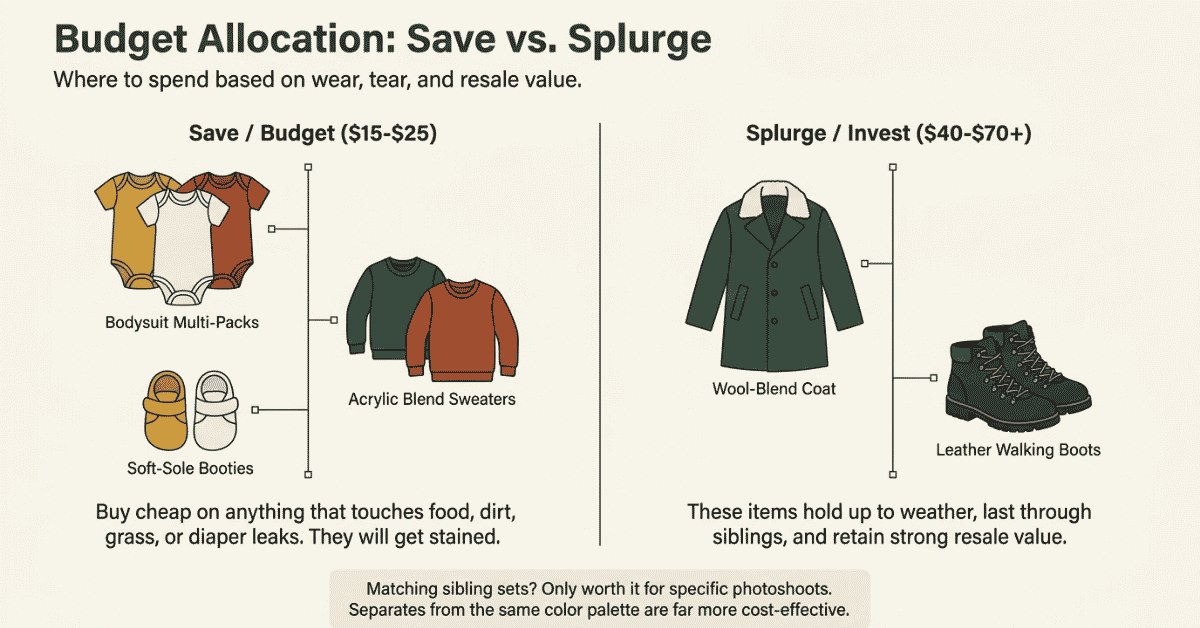
| Bodysuits/base layers | Multi-packs, $15-25 for 5 | Skip splurging here, they get stained |
| Outerwear/coat | $20-30 fleece jacket | $50-70 wool-blend coat if she’ll wear it 2+ seasons |
| Footwear | $15-20 soft-sole booties | $40+ leather boots once walking, they last through siblings |
| Sweaters/cardigans | $12-18 acrylic blend | $25-35 cotton-cashmere blend she can layer |
The pattern holds: buy cheap on anything that touches food, dirt, or grass stains. Spend more on outerwear and shoes, since those hold up and often get reused or resold.
Sample 5-day fall outfit rotation
- Monday: Cotton bodysuit, corduroy overalls, knit booties
- Tuesday: Long-sleeve striped top, leggings, cardigan
- Wednesday: Footed sleeper for a cooler day spent mostly indoors
- Thursday: Flannel dress over leggings, fleece vest
- Friday: Bodysuit, jeans, chunky knit sweater, beanie for outdoor time
Rotate two jackets across the week, one fleece and one water-resistant shell, rather than buying five separate coats for five separate outfits.
Common mistakes with fall baby clothes
Buying a full winter-weight wardrobe in September is the biggest one. Fall temperatures swing 20-30 degrees between morning and afternoon, so mid-weight layers you can add or remove beat one heavy outfit that’s wrong by noon.
Another: sizing everything the same. A baby’s legs often grow faster than her torso between 6 and 18 months, so pants frequently need to run a size ahead of tops.
One more: skipping the sleep sack for naps just because it’s sweater season. A sleep sack is still the safest option over loose blankets, regardless of the calendar.
Summary: building a fall wardrobe that works
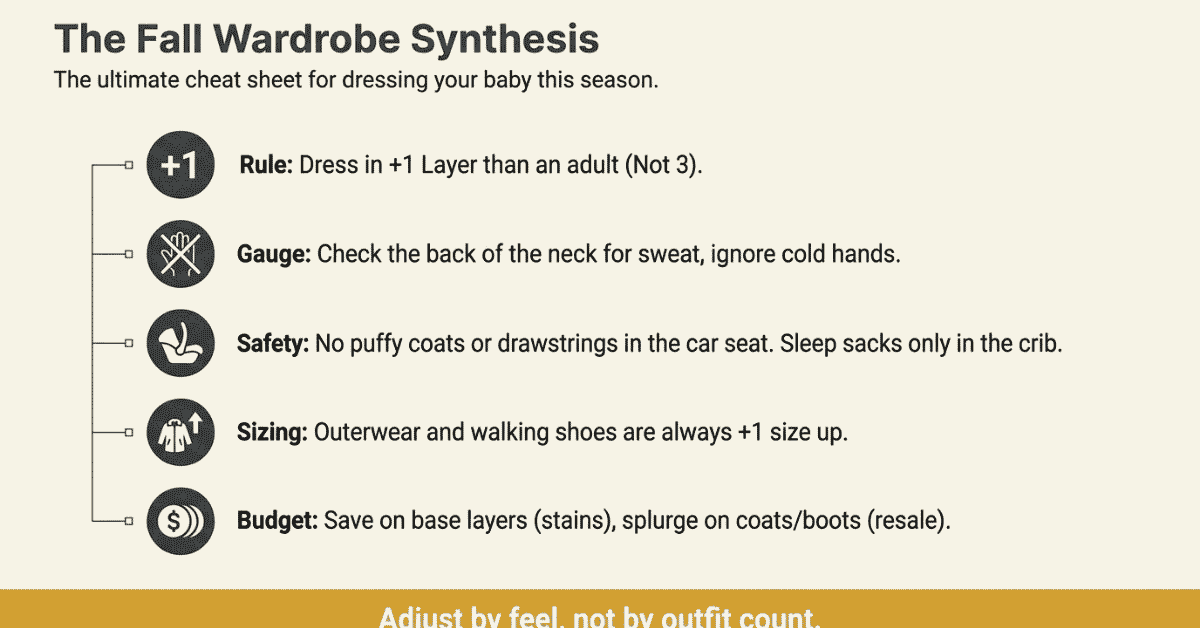
The framework holds regardless of her age: one base layer, one mid layer, one removable outer layer, sized to actual temperature swings rather than the season printed on the tag. Buy outerwear a size up, everything else true to size, and spend on footwear and coats rather than bodysuits that’ll be stained by October anyway.
A 5-piece rotation, 3 bodysuits or tops, 2 bottoms, 1-2 jackets, covers most weeks without overbuying. Add wool or heavier knits only once temps drop consistently under 50°F, and check the back of her neck, not her hands, to know if she’s actually cold.
FAQ
What temperature is too cold for a baby to wear just a onesie?
Below about 65°F, add a layer over the onesie. Under 50°F, she needs a mid layer plus outerwear, not just a jacket thrown over the onesie.
Do baby girls need tights under dresses in fall?
Yes, once temps drop under 65°F, since bare legs lose heat fast. Cotton tights work fine for milder days; save fleece-lined ones for under 50°F.
How many fall outfits does a newborn actually need?
5-7 outfits covers a full week with laundry days factored in, since newborns go through more changes from spit-up and diaper leaks.
Should I buy fall clothes a size up or true to size?
True to size for bodysuits and tops; one size up for outerwear and anything meant to layer over a sweater later in the season.
Are matching sibling or twin fall outfits worth buying?
Only for specific photos or an event, since matching sets usually cost more per piece than separates pulled from the same palette.
What’s the safest hat for a baby in a car seat?
A snug knit cap with no strings or pom-poms that could detach. Avoid chin straps, which are a strangulation risk once she’s buckled into a harness.