Master shopping for 18-24 months clothes with our practical buying guide covering sizing tips, comfortable fabrics, and smart wardrobe choices for active toddlers.
Toddlers gain immense mobility during their second year, meaning standard baby outfits often restrict crawling and running. Moving past infant fashion requires prioritizing stretchy waistbands, durable fabrics, and easy-on designs that withstand constant playground adventures.
Key Takeaways
-
Size Up Early: Many toddlers outgrow the height and weight limits of 18-24 months sizing before turning two.
-
Prioritize Separates: Transition away from snap-crotch creepers to simplify frequent diaper changes and early potty training.
-
Focus on Durability: Choose reinforced seams and heavy-duty knit cotton that survive 30°C to 40°C machine washing.
-
Embrace Elasticity: Soft, adjustable waistbands prevent clothes from sagging or pinching active toddlers.
-
Build a Capsule: Select neutral base colors so tops and bottoms mix and match effortlessly.
Navigating 18-24 months clothes sizing and rapid growth spurts
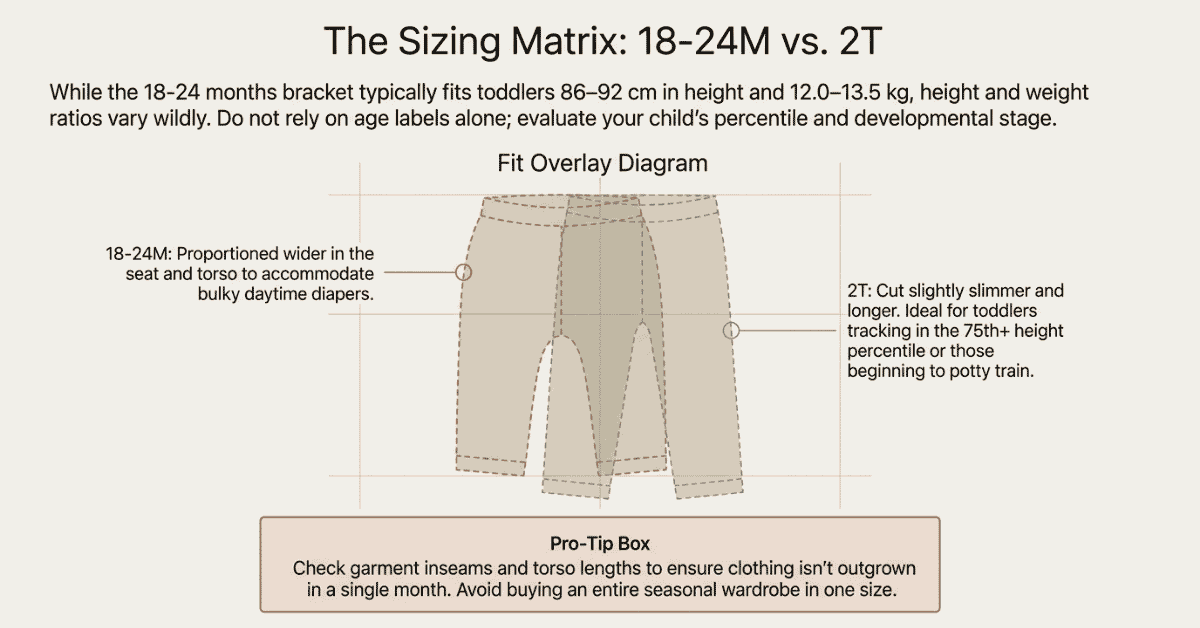
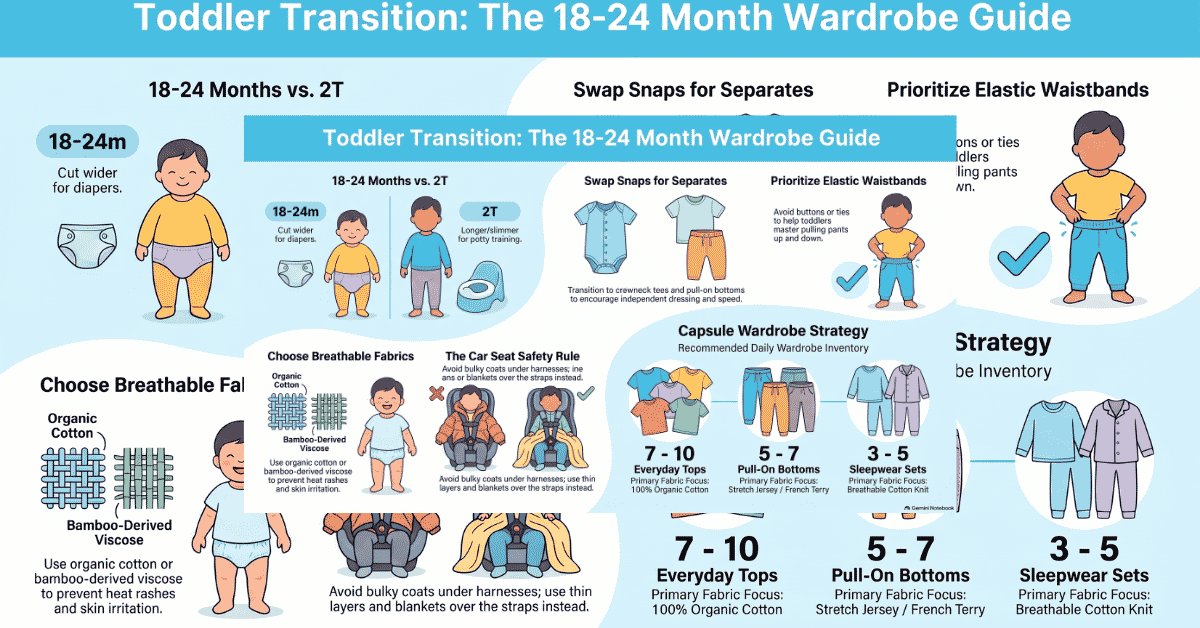
The 18-24 months size bracket typically accommodates toddlers ranging from 86 to 92 cm in height and weighing between 12.0 and 13.5 kg. However, height and weight ratios vary wildly among children at this developmental stage. A common point of confusion for buyers is deciding between standard 18-24 month garments and traditional 2T sizes. While 18-24 month items are cut proportionally for toddlers still wearing bulky diapers, 2T sizes are generally designed slightly slimmer and longer for children who are beginning to potty train.
When shopping ahead of time, avoid buying an entire seasonal wardrobe in a single size. If your child is tracking in the 75th percentile or higher for height, you may need to skip straight to size 2T or buy brands known for generous, relaxed cuts. Check brand-specific size charts rather than relying on age labels alone. Inspecting garment inseams and torso lengths ensures your child will not outgrow the clothing items within a single month of wear.
Understanding the shift from baby bodysuits to toddler separates
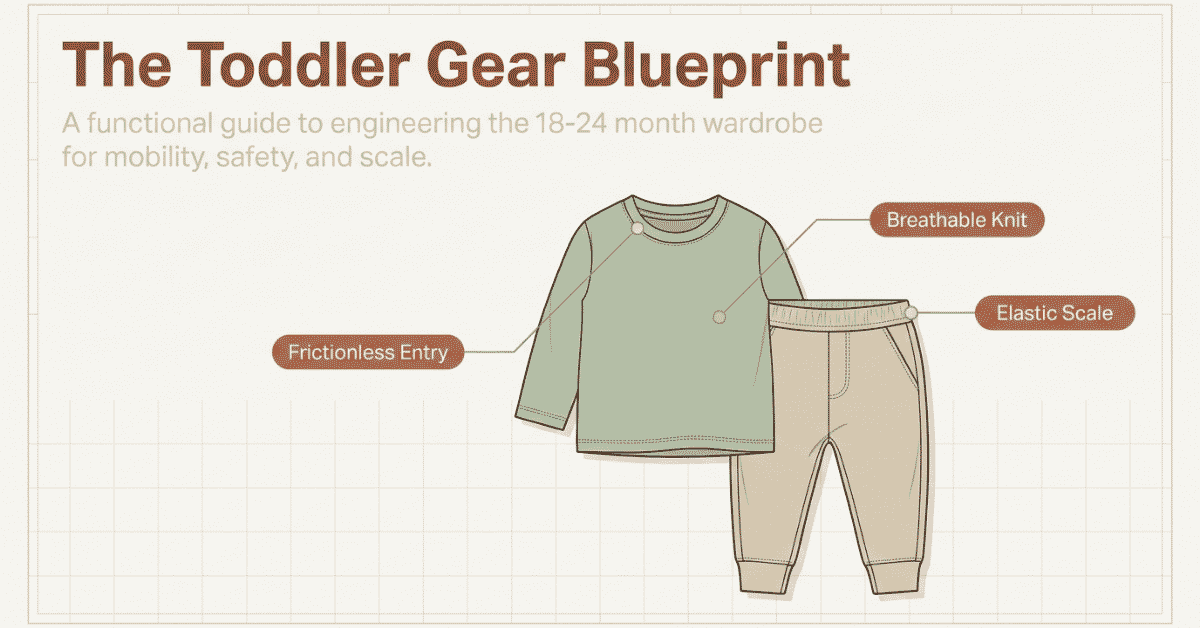
As your child transitions through the toddler milestone, traditional one-piece bodysuits with multiple bottom snaps become increasingly impractical. Active toddlers rarely stay still long enough for caregivers to fiddle with snap closures during mid-day changes. Moving to independent tops and pull-on bottoms saves time and encourages early self-dressing skills.
The ideal daytime wardrobe replaces snap garments with crewneck t-shirts, flexible cotton sweaters, and elastic-waist joggers. When purchasing separates, look for necklines featuring side shoulder poppers or stretchy envelope collars that slip easily over larger toddler heads. This structural shift makes quick outfit changes, messy meal cleanups, and outdoor trips much smoother for both parents and children. For additional inspiration on curating everyday basics, check out this guide on [INTERNAL LINK: toddler capsule wardrobes].
Essential everyday playwear checklist for active toddlers
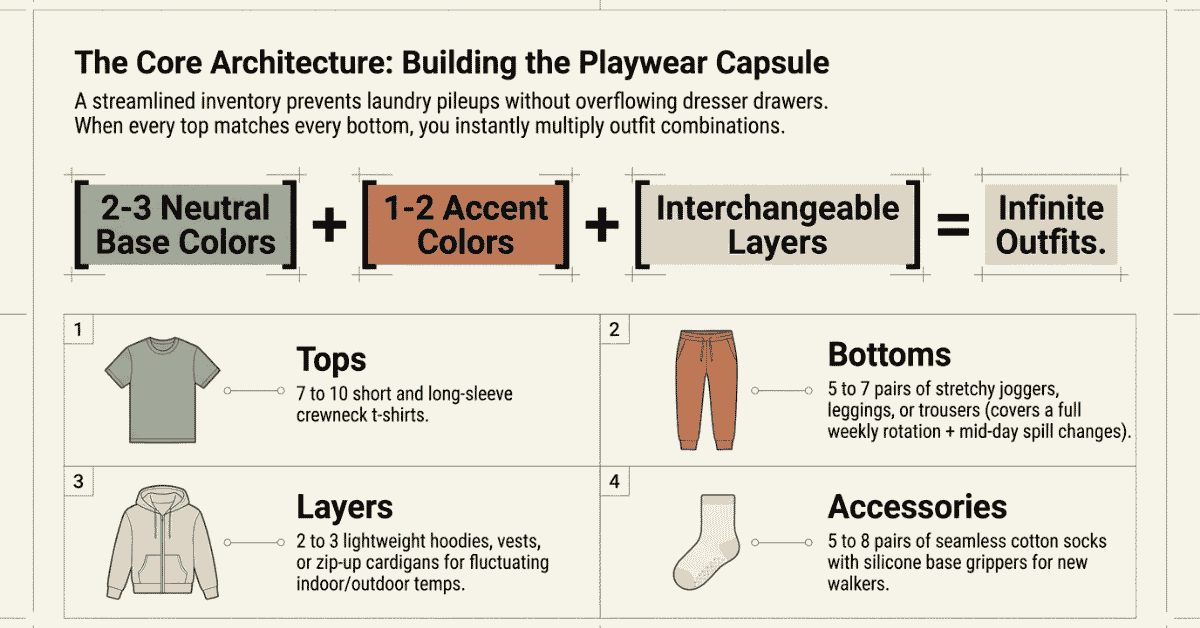
Building an efficient daily clothing rotation prevents laundry pileups without overflowing dresser drawers. Most families find that a streamlined inventory keeps pace with messy play and frequent wardrobe changes.
-
Tops: 7 to 10 short and long-sleeve crewneck t-shirts in breathable cotton.
-
Bottoms: 5 to 7 pairs of stretchy joggers, soft leggings, or knee-patch trousers.
-
Layers: 2 to 3 lightweight hoodies or cardigans for shifting indoor and outdoor temperatures.
-
Socks: 5 to 8 pairs of seamless cotton socks, preferably featuring silicone grippers on the bottom for new walkers.
Avoid stiff denim or restrictive overalls that hinder climbing and running. Soft jersey knits and French terry cotton provide the optimal blend of flexibility and comfort.
Choosing the right breathable fabrics for sensitive skin
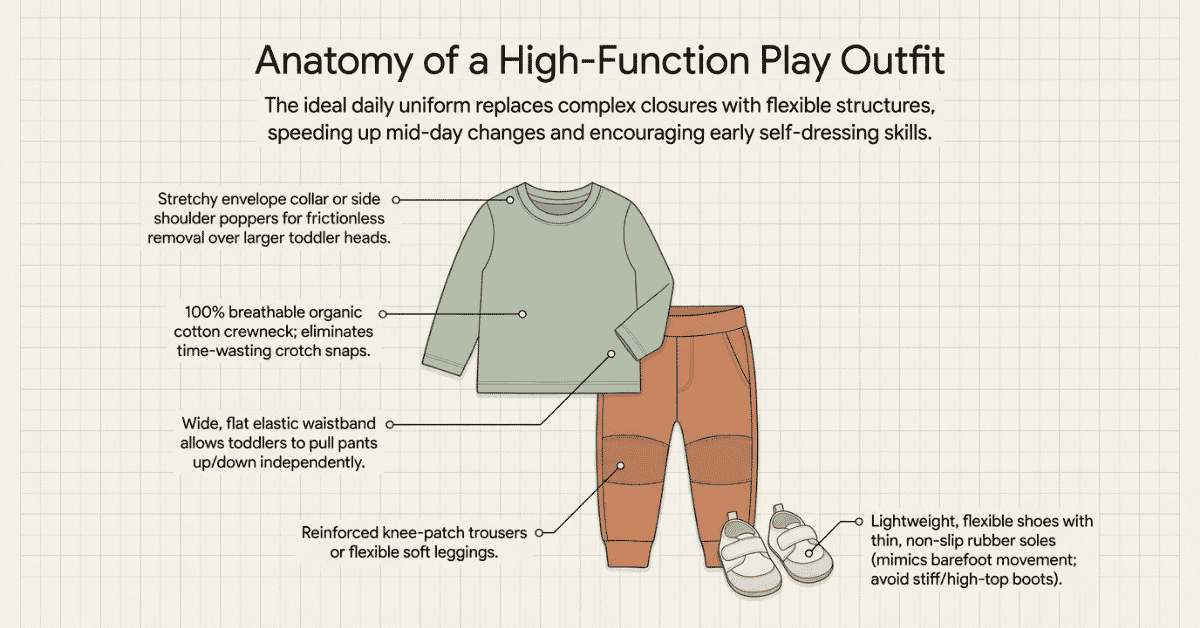
Toddler skin is remarkably delicate, making fabric selection a vital consideration for daily comfort and skin health. Synthetic blends often trap heat, leading to irritation, sweat rashes, and restless naps.
“Fabrics need to withstand frequent washing without losing shape, shrinking excessively, or becoming rough against sensitive skin.”
Organic cotton and bamboo-derived viscose rank among the top textile choices for this age bracket because they offer natural breathability and moisture-wicking properties. When shopping online or in-store, look for certifications indicating azo-free dyes and bio-wash softening treatments. These manufacturing processes minimize exposure to harsh chemical residues, protecting eczema-prone or sensitive toddlers during high-energy play.
Selecting functional sleepwear and transitional pajamas
Bedtime routines run smoother when children wear comfortable, temperature-regulated sleepwear that accommodates rolling and kicking. At 18 to 24 months, many children transition out of traditional swaddles into footed sleepers or separate pajama sets.
Look for one-piece zip-up sleepers equipped with two-way zippers to make midnight diaper changes faster. Ensure zippers feature protective fabric guard tabs at the chin to prevent scratching. For warmer summer months, switch to short-sleeve cotton pajama sets paired with a 1.0 to 1.5 tog sleep sack. In colder winter environments, 2.5 tog long-sleeve sleep bags or fleece-lined footed sleepers help maintain a steady core body temperature without requiring loose blankets in the crib.
Layering outerwear for unpredictable outdoor weather
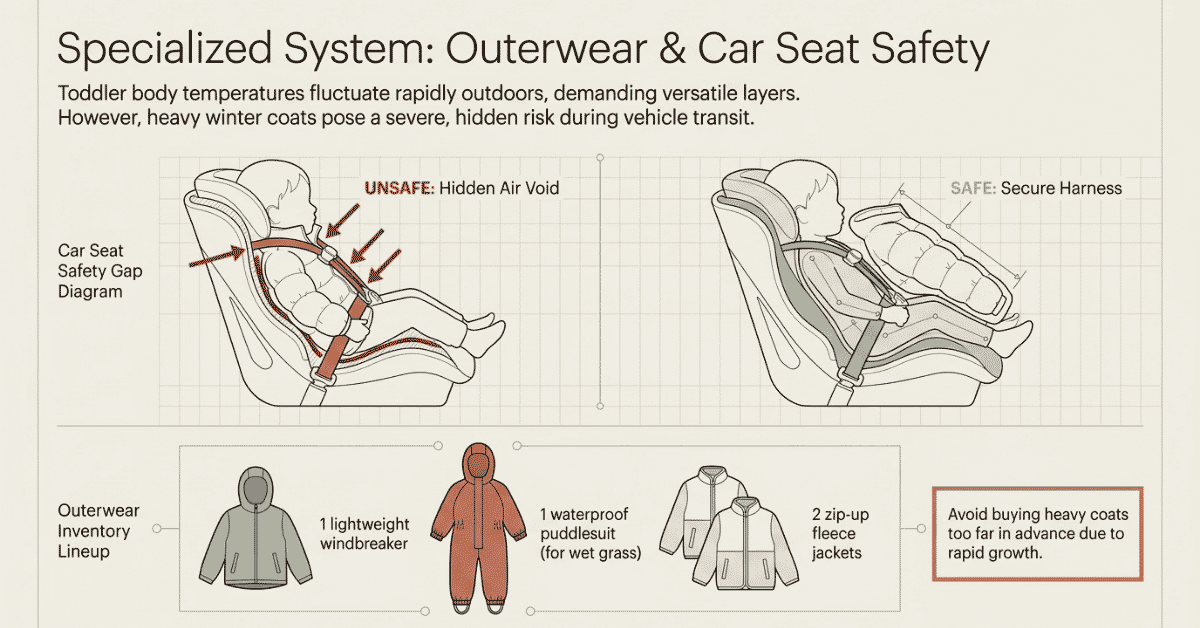
Outdoor exploration requires versatile outerwear that blocks wind and moisture without restricting arm movement. Because toddler body temperatures fluctuate rapidly during active play, heavy winter coats are often too cumbersome for daily park visits.
A practical outerwear lineup includes one lightweight windbreaker, a waterproof puddlesuit for wet grass, and two zip-up fleece jackets. When traveling by vehicle, remember safety guidelines regarding winter gear.
“The American Academy of Pediatrics recommends using thin layers in the car seat and adding blankets or approved covers over the harness instead.”
Bulky winter coats compress under safety straps, creating a dangerous gap in harness security during sudden stops. Dress your child in thin, warm layers inside the car and layer a heavy coat over top once safely buckled. You can explore recommended safety standards further at [EXTERNAL LINK: American Academy of Pediatrics car seat guidelines].
Preparing for potty training with accessible underwear and pants
Between 18 and 24 months, many families begin laying the groundwork for future potty training milestones. Wardrobe adjustments during this window focus on garments that slide down effortlessly.
Replace tight buttons, snaps, and complex waist ties with elasticated pull-on trousers and loose shorts. If you are introducing training pants or cotton underwear to build familiarity, purchase 10 to 14 pairs to account for inevitable early accidents. Underwear should feature soft, non-binding leg openings that do not red-mark sensitive thighs. Choosing wide, flat elastic waistbands ensures your toddler can pull their pants up and down independently, fostering confidence during bathroom routines.
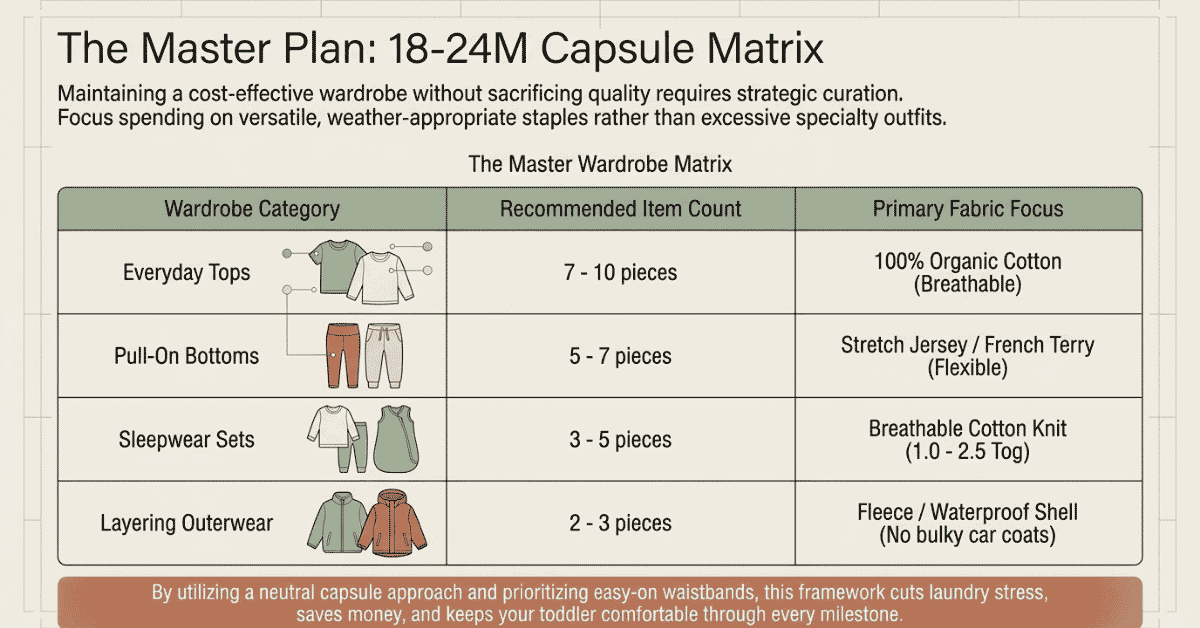
Balancing budget and durability with smart capsule wardrobes
Maintaining a cost-effective wardrobe without sacrificing quality comes down to strategic curation. Buying dozens of single-use outfits often leads to wasted money and cluttered closets.
| Wardrobe Category | Recommended Item Count | Primary Fabric Focus |
| Everyday Tops | 7 – 10 pieces | 100% Organic Cotton |
| Pull-On Bottoms | 5 – 7 pieces | Stretch Jersey / French Terry |
| Sleepwear Sets | 3 – 5 pieces | Breathable Cotton Knit |
| Layering Outerwear | 2 – 3 pieces | Fleece / Waterproof Shell |
Define a cohesive color palette consisting of two or three neutral base shades and a couple of accent colors. When every top matches every pair of pants, you instantly multiply your outfit combinations while minimizing the total number of garments you need to purchase.
Managing nursery and daycare clothing requirements
Sending your toddler to daycare or a play program introduces unique clothing demands. Clothes will encounter finger paints, mud, food spills, and rigorous playground equipment.
Designate a specific subset of play clothes that you do not mind getting permanently stained. Clearly label every individual item, including jackets and hats, using permanent fabric markers or iron-on tags to prevent items from getting lost in shared cubbies. Always pack at least one complete spare outfit—including a top, bottoms, socks, and underwear—in a waterproof bag inside your child’s daily backpack. Choosing machine-washable fabrics rated for 30°C to 40°C cycles ensures everyday cleanup remains hassle-free.
Practical summary of the 18-24 months wardrobe strategy
Assembling a functional wardrobe for this transitional stage centers on flexibility, comfort, and safety. By prioritizing stretchy organic cotton separates, easy-on waistbands, and weather-appropriate layers, you ensure your child can move, climb, and explore without restriction.
Focus your spending on versatile daily staples rather than excessive specialty outfits. Keep a close eye on individual growth metrics rather than strict age labels, and utilize a capsule approach to mix and match pieces effortlessly. This thoughtful framework saves money, cuts down laundry stress, and keeps your toddler comfortable through every milestone.
Frequently asked questions about 18-24 months clothing
What is the main difference between 18-24 months and 2T clothing sizes?
The 18-24 months size is proportioned slightly wider in the seat and torso to accommodate bulky daytime diapers. In contrast, 2T sizes are cut longer and leaner for toddlers who are actively toilet training or slimmer in build.
How many pairs of pants do I need for an active toddler?
Aim for 5 to 7 pairs of flexible pull-on joggers, leggings, or soft trousers. This quantity covers a full weekly rotation between laundry days while accommodating mid-day outfit changes from playground dirt or food spills.
Are organic cotton clothes worth the extra investment?
Organic cotton is free from harsh chemical pesticides and toxic synthetic dyes, making it significantly softer and safer for children with sensitive skin or eczema. It also withstands frequent industrial washing much better than cheaper blended fabrics.
How can I keep toddler clothes from shrinking in the wash?
Most toddler clothes are washed frequently at 30°C to 40°C temperatures. To prevent excessive shrinkage, wash cotton garments on cold cycles and tumble dry on low heat or line dry them whenever possible.
What types of shoes are best for children learning to walk?
Look for lightweight, flexible shoes with thin, non-slip rubber soles that mimic barefoot movement. Avoid stiff soles or high-top boots that restrict natural ankle flexion during outdoor walking practice.
How do I handle seasonal transitions when my toddler is growing fast?
Buy transitional layers like zip-up cardigans, lightweight hoodies, and vests that can be added or removed as daily temperatures fluctuate. Avoid buying heavy seasonal coats too far in advance to accurately gauge your child’s size.