
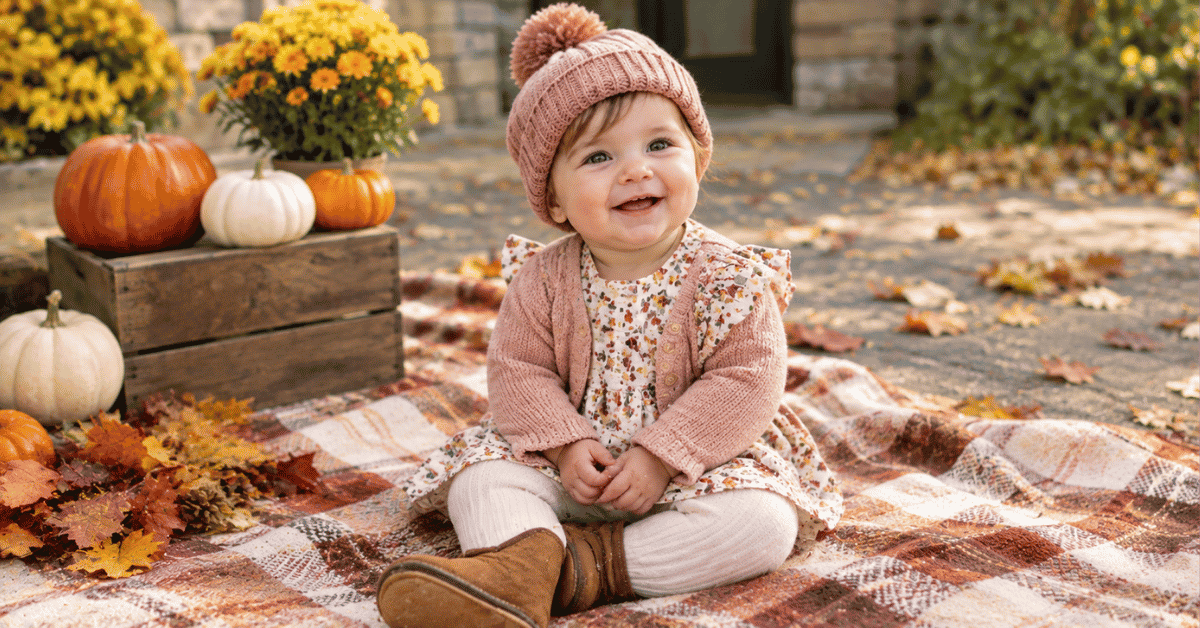
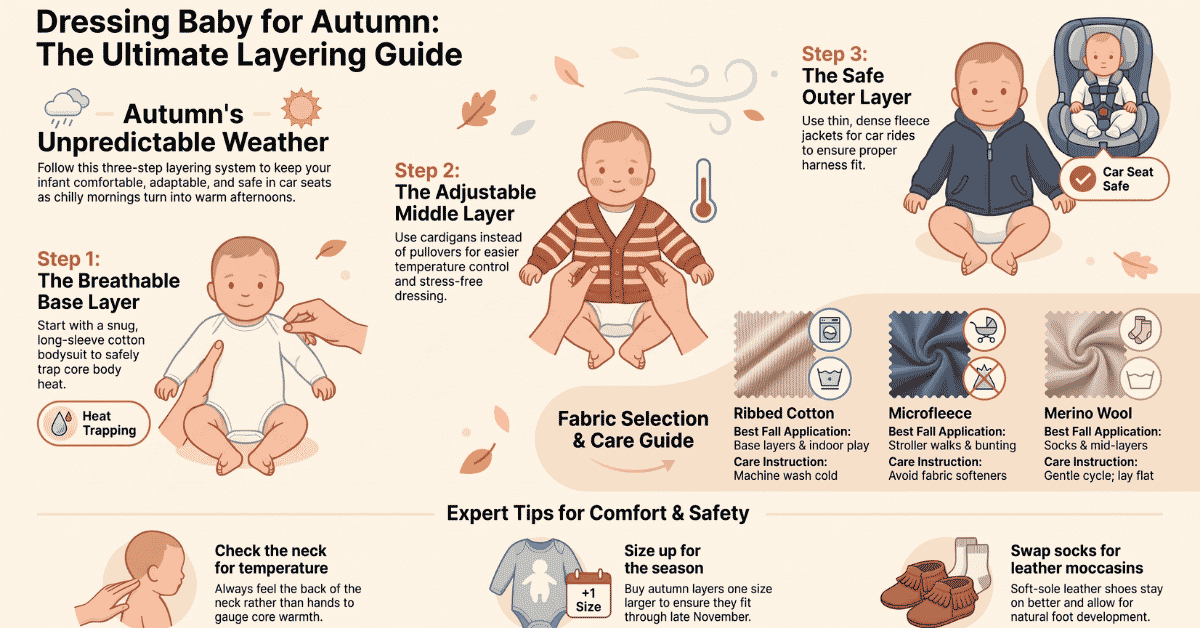
Dressing your infant for the autumn season means balancing adorable clothing styles with highly unpredictable weather. Chilly, windy mornings can quickly turn into unexpectedly sunny, warm afternoons. You need a set of practical clothing layers that keep your growing child comfortable all day. The perfect fall outfit for baby girl relies on a breathable cotton base layer. You build upon this simple foundation with a chunky knit cardigan and soft, stretchy leggings. Finish the seasonal look with soft-sole leather booties and a lightweight beanie to trap body heat safely.
Key takeaways
-
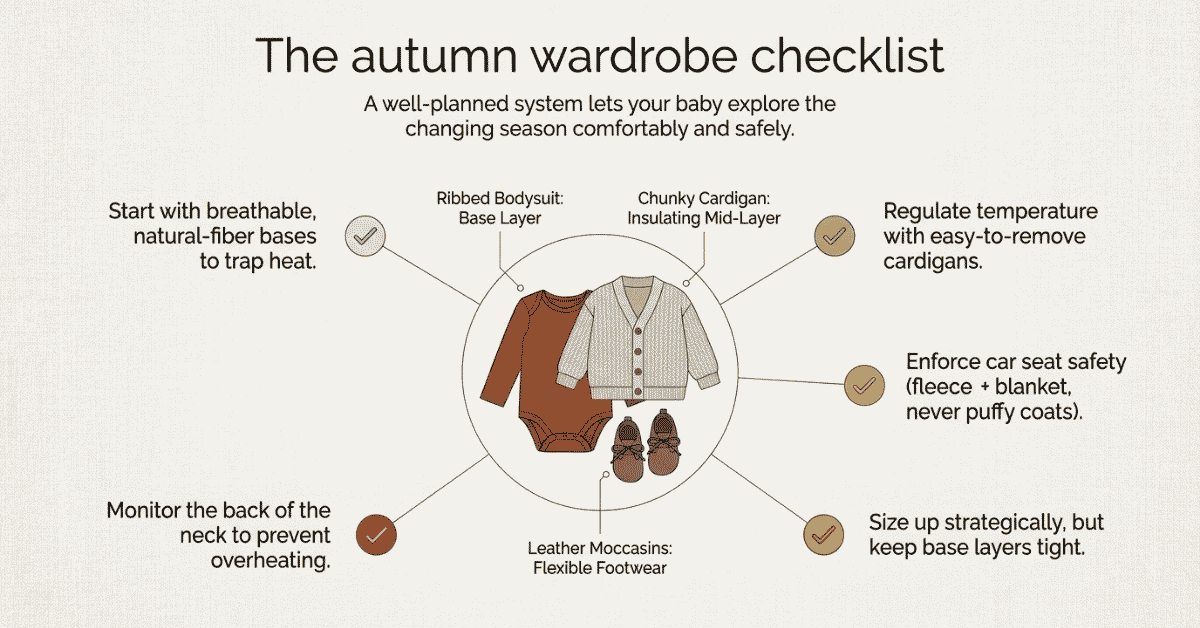
Start every outfit with a snug, long-sleeve cotton bodysuit.
-
Use cardigans instead of pullovers for easier temperature control.
-
Avoid puffy winter coats while your baby rides in a car seat.
-
Size up by three months to ensure clothes fit through November.
-
Stick to machine-washable fabrics like ribbed cotton and microfleece.
-
Check your baby’s neck to accurately monitor their core temperature outdoors.
Building the base layer for a fall outfit for baby girl
Starting with a solid cotton bodysuit sets the foundation for any autumn wardrobe. You need a base layer that sits close to the skin to trap body heat safely. Long-sleeve onesies with envelope necklines make quick changes much easier when messy diaper blowouts happen. Ribbed cotton materials stretch nicely over a growing belly while holding their shape through multiple hot water washes.
Buying packs of neutral colors saves money and creates endless mixing options. Brands like Carter’s sell five-packs of plain long-sleeve bodysuits for around $16. These basic pieces pair perfectly under heavier sweaters or overalls without adding bulky fabric folds. Snaps at the crotch keep the shirt pulled down tight over the baby’s back to prevent cold drafts from reaching their skin.
Always prioritize natural fibers for this specific layer to avoid trapping sweat. Synthetic materials close to the skin can cause heat rashes even in cooler weather. Organic cotton options from places like Hanna Andersson cost slightly more at roughly $20 per shirt. The extra cost pays off because the fabric stays incredibly soft against delicate newborn skin all season long.
Choosing the right middle layers for autumn warmth
Cardigans serve as the ultimate temperature regulators for an infant. You can easily unbutton them without pulling heavy fabric over your child’s head. Chunky knit sweaters look incredibly charming but often restrict a baby’s arm movements. Stick to soft, pliable cotton knits that let your little one crawl and reach freely.
Avoid pullovers entirely during the first six months of life. Babies generally hate having thick materials dragged across their faces. A zip-up or button-down sweater makes wardrobe changes much more peaceful for everyone. [INTERNAL LINK: stress free baby dressing tips] Brands like Gap Kids offer excellent medium-weight cardigans for about $25 that hold up well to daily wear.
Color coordination matters when you build a capsule wardrobe for the season. Buy middle layers in neutral tones like oatmeal, rust, or forest green. These shades easily match any patterned leggings or basic bodysuits you already own. Make sure the sweater cuffs fold back easily so you can keep their hands free for playing.
Outerwear options for chilly autumn mornings
Morning stroller walks require a dedicated outer layer to block the freezing wind. Fleece bunting suits provide excellent full-body coverage for babies under six months. These one-piece suits usually feature fold-over mittens and footies to trap maximum warmth. You just zip the infant inside and head out the door quickly.
Car seat safety completely dictates your choice of travel outerwear. Puffy winter coats create dangerous slack in car seat harness straps during an accident. You must rely on thin, densely woven fleece jackets for car rides instead. Columbia makes a highly rated infant fleece jacket for roughly $35 that passes strict safety checks.
You can also use a thick blanket tucked around the baby after buckling them in. This method allows you to remove the heat source once the car’s heater warms up the cabin. Removing layers prevents your child from sweating heavily during long holiday drives. Waterproof rain jackets offer another great option for wet November days, especially if you buy unlined shells that fit comfortably over daily sweaters.
Best fabrics for an autumn baby wardrobe
Selecting the correct materials prevents your baby from overheating or getting too cold. Babies can’t regulate their internal temperatures well during their first year of life. You must choose fabrics that breathe naturally while still insulating against the bitter wind. Mixing different textiles creates a functional wardrobe that adapts to shifting weather conditions.
Parents often struggle to decide between natural and synthetic options for cold-weather gear. [INTERNAL LINK: baby sensitive skin care] You can save time by focusing on a few proven materials that work specifically for infants. Check the tags on garments before purchasing to ensure they meet your daily care needs.
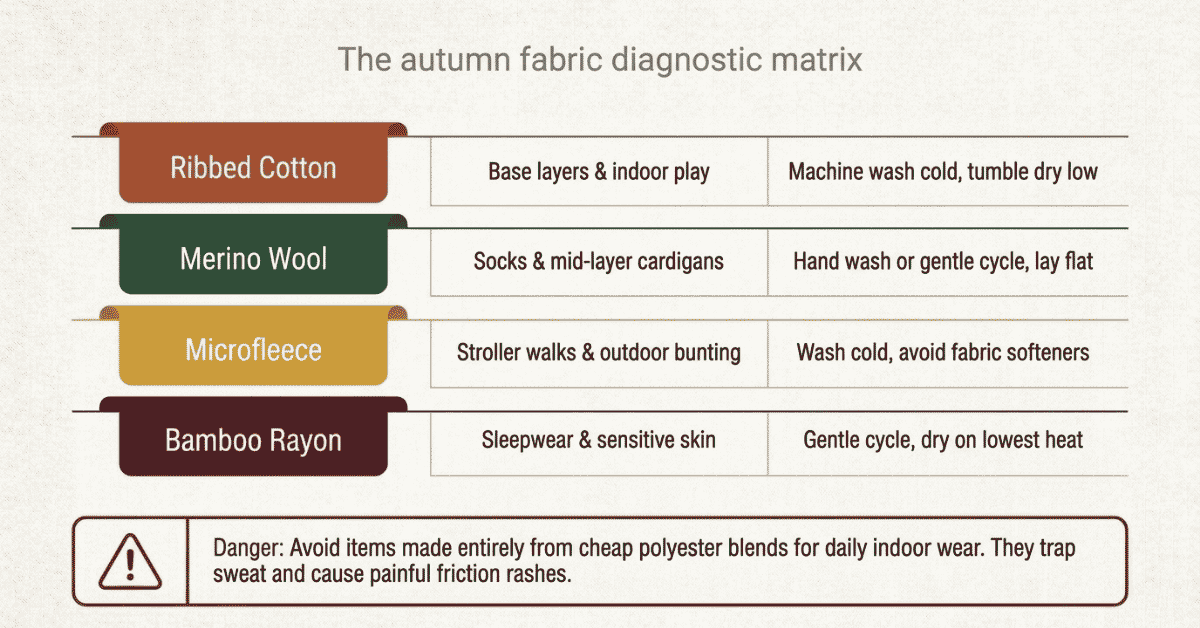
| Fabric Type | Best Fall Application | Care Instructions |
| Ribbed Cotton | Base layers and indoor play outfits | Machine wash cold, tumble dry low |
| Merino Wool | Socks and mid-layer cardigans | Hand wash or gentle cycle, lay flat |
| Microfleece | Stroller walks and outdoor bunting | Wash cold, avoid fabric softeners |
| Bamboo Rayon | Sleepwear and sensitive skin contact | Gentle cycle, dry on lowest heat setting |
Avoid buying items made entirely from cheap polyester blends for daily indoor wear. These materials trap sweat against the skin and often cause painful friction rashes. Sticking to the fabrics in this table keeps your infant comfortable and happy.
Footwear and accessories to complete the look
Keeping socks on a kicking infant feels like an impossible daily task. Soft-sole leather moccasins solve this problem beautifully while keeping tiny toes completely warm. The elastic bands around the ankles grip gently without leaving red marks on the skin. Brands like Freshly Picked sell durable moccasins for about $30 that genuinely stay put all day.
Avoid stiff rubber-soled shoes for babies who aren’t walking yet. Heavy shoes restrict natural foot development and frustrate crawling infants. Leather or thick wool booties provide all the necessary insulation for autumn weather. You can easily slip thick cotton socks underneath these booties for extra cold days.
Headwear plays a major role in regulating your baby’s temperature outdoors. A lightweight bamboo beanie works perfectly for early September breezes. You can switch to a thicker cable-knit hat once November brings heavier frosts. Don’t forget to add a few simple clip-on hair bows to elevate a basic sweater and legging combination for indoor events.
Handling temperature swings during the day
Autumn weather changes rapidly between the early morning and late afternoon. A brisk 45-degree morning often turns into a sunny 70-degree afternoon within hours. You must dress your baby in easily removable layers to handle this wild fluctuation. Taking off one sweater immediately stops a baby from overheating in a warm car.
Start the morning with a bodysuit, leggings, a cardigan, and a light hat. Check the back of your baby’s neck periodically to gauge their core temperature. Sweaty or hot skin means you need to remove a layer right away. Cold hands don’t always indicate a cold baby, so always check the neck first.
Your diaper bag needs to function as a mobile closet during the autumn months. Always pack an extra short-sleeve onesie for unexpectedly hot afternoons. Keep a spare pair of thick socks tucked in the side pocket just in case. Take off the baby’s hat and outer sweater as soon as you enter a heated building to prevent them from sweating indoors.
Sizing up your autumn baby clothes for growth
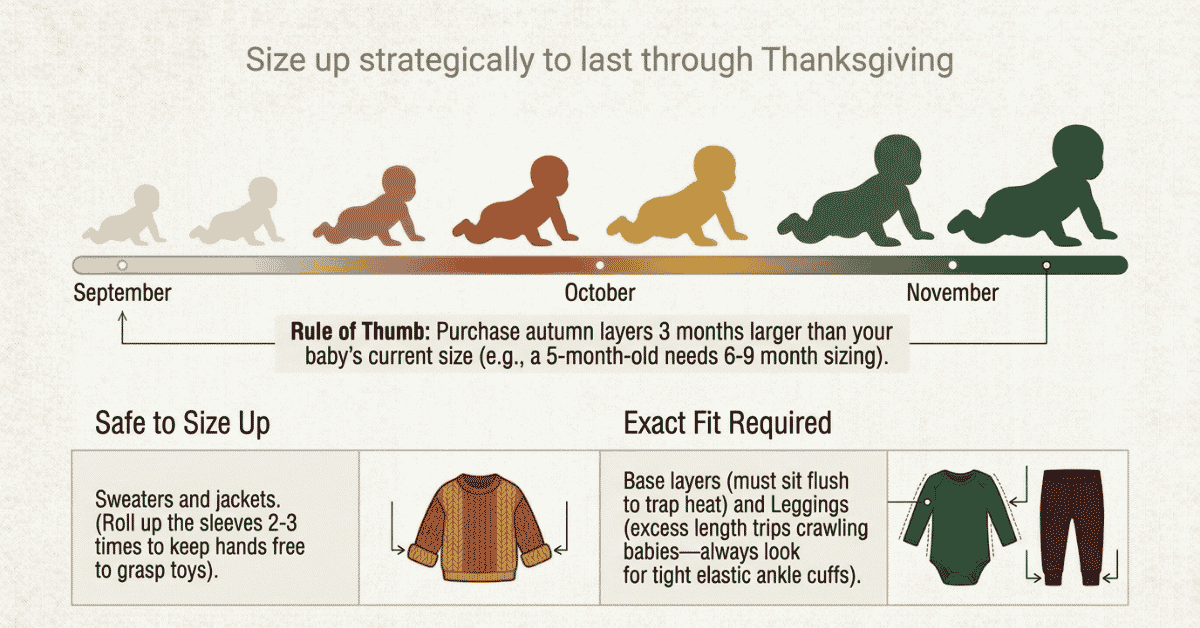
Infants grow at an astonishing rate during their first twelve months of life. Buying exactly to their current size means the clothes will likely not fit by Thanksgiving. You should purchase autumn layers one size larger than your baby currently wears. A five-month-old infant needs six-to-nine-month sizing to last through the entire fall season.
Sizing up works perfectly for specific items like cardigans and jackets. A slightly oversized sweater simply looks cozy and provides extra room for thick base layers. You can easily roll up the sleeves two or three times so their hands remain free to grasp toys. This simple trick extends the life of the expensive garment significantly.
Pants require a bit more caution when you decide to buy larger sizes. Leggings that are too long will trip up a baby who is learning to crawl or walk. Look for joggers with tight elastic ankle cuffs that stay reliably above the heel. Don’t size up on base layers, as these items must sit flush against the skin to trap body heat effectively.
Putting together matching sets for photos
Autumn offers incredible backdrops for family portraits and holiday greeting cards. Putting together a cohesive outfit makes those pumpkin patch photos look truly spectacular. You don’t need expensive formal wear to create a beautiful seasonal aesthetic. A simple two-piece ribbed knit set in a rich jewel tone works perfectly for the camera.
Colors like mustard yellow, burgundy, and burnt orange scream fall fashion. You can pair a rust-colored sweater with cream leggings for a classic, soft contrast. Add a textured element like a corduroy jumper to give the outfit more visual depth in pictures. [EXTERNAL LINK: seasonal color theory for photography]
Keep the baby’s comfort as the main priority when styling for professional photos. A miserable, itchy baby will cry through the entire photography session. Wash all new clothes at least once before the shoot to soften stiff fabrics. Bring a matching blanket to the location to use as a warm prop or a clean spot to sit on the grass.
Real fall outfit for baby girl ideas for different occasions
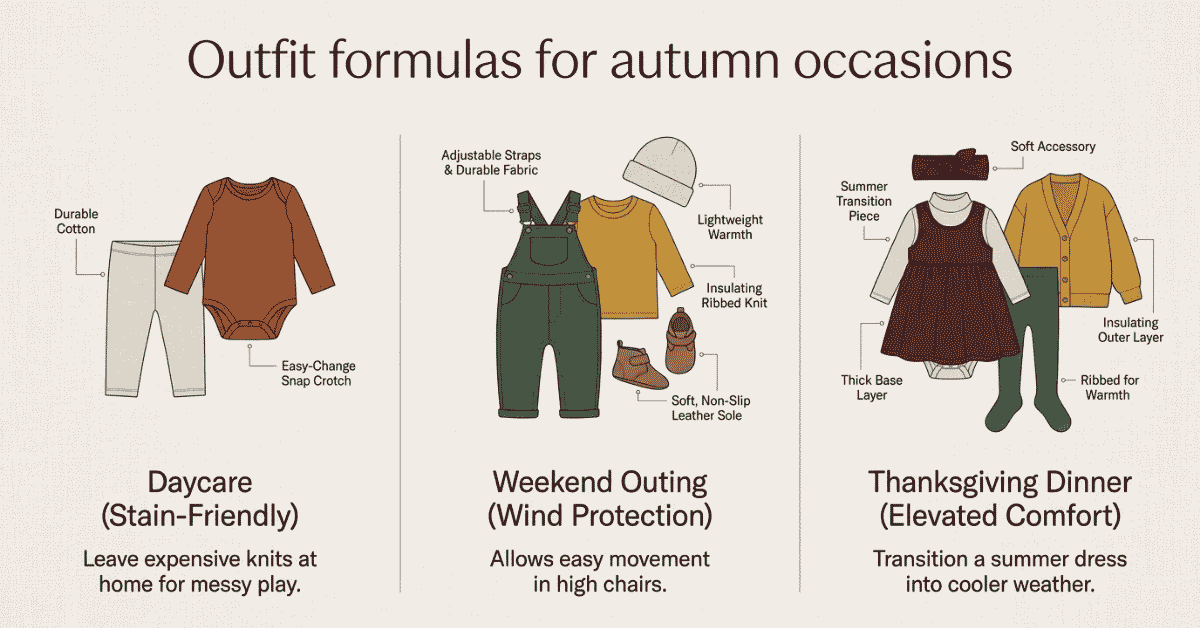
Daycare providers prefer simple outfits that allow for quick diaper changes and messy play. You should dress your child in basic cotton leggings and a long-sleeve bodysuit. Leave the expensive knit sweaters at home to avoid permanent paint or food stains. Send a backup zip-up hoodie in the diaper bag for outdoor playground time.
Weekend outings require slightly more planning to handle unpredictable wind or rain. A corduroy overall set layered over a ribbed long-sleeve shirt looks great and wears remarkably well. Add soft-sole leather booties and a lightweight beanie to protect their extremities from sudden drafts. This combination allows for easy movement while sitting in a restaurant high chair or shopping cart.
Family dinners and Thanksgiving gatherings call for a slightly elevated wardrobe approach. You can easily transition a lightweight summer dress into cooler weather. Add a thick long-sleeve bodysuit underneath the dress and opaque ribbed tights on the bottom. Top this combination with a chunky cardigan and a soft fabric headband for a perfect holiday look.
Summary of making your baby’s autumn wardrobe work
Dressing your infant for autumn requires a smart system rather than a massive closet. You save money and reduce stress by relying on a few high-quality basics. Start every outfit with a snug, breathable cotton layer directly against the skin. Build warmth using easy-to-remove middle layers like soft, button-down cardigans.
Protect your baby from the wind with safe, thin fleece jackets and soft knit hats. Remember that car seat safety always overrides the need for a thick winter coat during travel. Keep an extra set of clothes in your bag to handle unexpected afternoon heatwaves.
Check your baby’s neck regularly to ensure they remain perfectly comfortable and dry. Sweaty skin means you need to remove a layer immediately. Cold weather doesn’t have to stop your family from enjoying outdoor activities together. A well-planned wardrobe lets your little one explore the changing season comfortably and safely.
Frequently asked questions about infant fall fashion
Are tights or leggings better for infants in autumn?
Leggings provide more durability and warmth for crawling babies. Tights often snag on carpets or restrict tiny toes as the baby moves. You can pair leggings with warm socks for much better heat retention.
Do babies need to wear coats in their car seats?
Infants should never wear thick puffy coats in a safety seat. The padding compresses during a crash and leaves the harness too loose to protect them. Use a thin fleece jacket instead and place a blanket over the buckled straps.
Which shoe style works best for pre-walking babies?
Soft-sole leather moccasins stay on tiny feet much better than stiff sneakers. They allow natural foot movement while protecting toes from chilly floors. Look for styles with elastic ankles to prevent them from slipping off during the day.
Should infants wear hats outdoors during September and October?
Babies lose a significant amount of body heat rapidly through their heads. A thin cotton or bamboo beanie provides perfect coverage for mild autumn days. You can switch to a thicker knit hat once the morning frost arrives.
Can I use summer dresses in an autumn wardrobe?
You can easily transition lightweight summer dresses into cooler weather. Add a long-sleeve bodysuit underneath the dress and thick ribbed tights on the bottom. Top the combination with a chunky knitted cardigan to complete the look.
Is fleece safe for a baby to wear all day?
Fleece traps heat extremely well but lacks natural fabric breathability. Your baby might sweat heavily if they wear it indoors for extended periods. Save your thick fleece layers strictly for outdoor walks and chilly morning outings.