
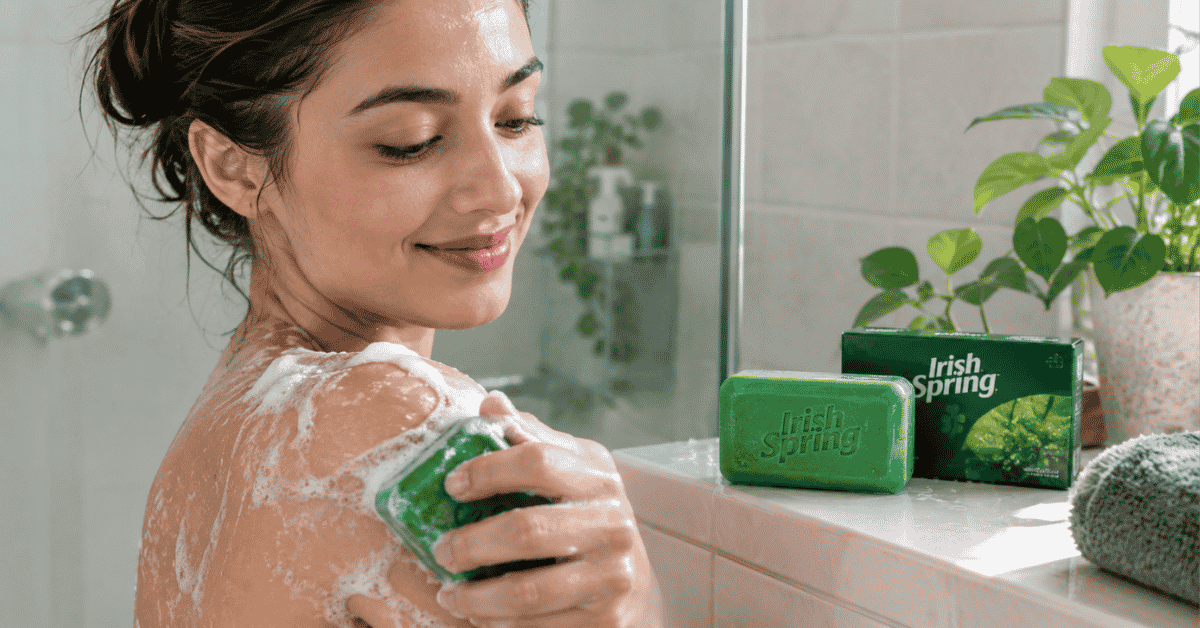
Wondering if can women use Irish Spring soap safely? Learn how its pH affects skin, intimate care risks, and top alternatives in this guide.
Women can safely use Irish Spring soap on normal, non-sensitive body skin if they rinse thoroughly and moisturize right after showering. However, women should never apply Irish Spring bar soap to their face or intimate vulvar areas due to its alkaline pH 9.5 rating and traditional soap base. Women with eczema, seasonal dryness, or fragrance allergies should choose a lower-pH body wash instead.
Key Takeaways
-
Gender Neutral Formula: Irish Spring contains no gender-specific chemical ingredients and cleanses female skin as effectively as male skin.
-
High pH Level: The classic bar soap measures between pH 9.0 and 10.0, which can strip natural skin oils and cause tightness.
-
Strict Intimate Boundary: Never use Irish Spring on vulvar tissues; it disrupts delicate vaginal microflora and causes irritation.
-
Fragrance Sensitivity: High concentrations of synthetic fragrance and Green 3/Green 8 dyes can trigger contact dermatitis in sensitive users.
-
Format Matters: Irish Spring Liquid Body Wash uses synthetic surfactants (pH 6.0–6.5) and is noticeably milder on female skin than the solid bar.
Can women use irish spring soap for daily body washing?

When asking if can women use Irish Spring soap, the simple answer is yes, women can wash their arms, legs, and torso with Irish Spring soap without medical risk. The idea that Irish Spring is engineered exclusively for male biology is purely a product of marketing history. The soap cleanses grease, dirt, and sweat through standard fatty acid salts that function identically regardless of gender.
However, daily use on female skin requires attention to skin type. On average, female skin exhibits a slightly lower surface pH and thinner epidermal layers in specific areas compared to male skin. Washing daily with a heavy-duty cleansing bar can strip surface lipids faster than your sebaceous glands produce them. If your skin feels tight, squeaky, or itchy within ten minutes of drying off, your daily shower routine is eroding your protective barrier.
Women who work out heavily or prefer a strong, long-lasting scent can incorporate Irish Spring into their routine without issues. The key is moderation. Using it every second day or alternating with a hydrating cream wash keeps skin clean while preventing chronic tightness and flaky patches.
How Irish Spring soap alters female skin pH balance and barrier function
Your skin mantle naturally operates at an acidic pH between 4.7 and 5.5. This natural acidity creates a protective environment where beneficial bacteria thrive while harmful pathogens and moisture loss are held in check. Maintaining this acidic mantle is critical for keeping skin smooth, flexible, and resilient against environmental stressors.
Classic Irish Spring bar soap is made by saponifying fats with sodium hydroxide, resulting in an alkaline product with a pH between 9.0 and 10.0. Applying a pH 9.5 bar to a pH 5.0 skin surface creates an immediate chemical shift. Alkaline soaps neutralize skin acids, dissolve intercellular lipids, and disrupt the stratum corneum structure. [EXTERNAL LINK: Journal of Dermatological Science skin pH study]
While skin eventually restores its natural acid mantle over 2 to 4 hours, repeated daily exposure to pH 10.0 soap slows this recovery process. For women, prolonged alkaline exposure leads to transepidermal water loss, leaving skin dull, rough, and susceptible to environmental irritants. Switching to a formula closer to natural skin pH protects this protective layer.
Why women should avoid using Irish Spring soap for intimate hygiene
Under no circumstances should women use Irish Spring bar soap or body wash to cleanse the vulva or vaginal area. The internal vagina is self-cleansing, while the external vulva is lined with delicate mucous membranes that require gentle, acid-balanced care. The typical vulvar pH ranges from 3.8 to 4.5, making it far more sensitive to alkaline disruption than body skin.
Washing intimate areas with Irish Spring introduces heavy alkali, strong detergents, and artificial perfumes directly onto sensitive tissue. This strips protective natural secretions and alters the local lactobacilli bacterial population. When beneficial bacteria decline, opportunistic organisms like Candida albicans or Gardnerella vaginalis multiply rapidly, increasing the risk of yeast infections and bacterial vaginosis.
Additionally, synthetic fragrance compounds in Irish Spring frequently cause chemical irritation, known as contact vulvitis. Symptoms include intense burning, redness, swelling, and uncomfortable itching that mimics an infection. Intimate hygiene requires only warm water or a specialized, fragrance-free cleanser rated at pH 4.0 to 4.5.
Irish Spring soap ingredients that trigger skin sensitivity in women
Understanding the chemical formula of Irish Spring helps explain why certain skin types react poorly to it. The traditional bar contains several concentrated cleansers and sensory additives designed for maximum lather and persistent aroma.
-
Sodium Tallowate & Sodium Palmate: Saponified animal fats and palm oils that create a hard, long-lasting bar with dense foam, but high stripping capacity.
-
Sodium Laureth Sulfate (SLES): Present in liquid variants to boost lather, which can irritate thin or compromised skin membranes.
-
Synthetic Parfum (Fragrance): A dense blend of aroma chemicals designed to last up to 12 hours, recognized as a primary contact allergen in cosmetic dermatology.
-
Green 3 and Green 8 Dyes: Artificial colorants added for visual identity that provide no skincare benefit and can trigger localized dye eczema.
Common Irish Spring Irritants vs. Skin Response:
┌─────────────────────┬───────────────────────────┬──────────────────────────┐
│ Ingredient          │ Primary Purpose           │ Common Skin Reaction     │
├─────────────────────┼───────────────────────────┼──────────────────────────┤
│ Sodium Tallowate    │ Primary Soap Base         │ Strips natural lipids    │
│ Synthetic Fragrance │ 12-Hour Deodorant Scent   │ Allergic contact rash    │
│ Green 3 & 8 Dyes    │ Visual Coloration         │ Localized eczema patches │
│ Tetrasodium EDTA    │ Chelating Agent/Hard Water│ Mild stinging on cuts    │
└─────────────────────┴───────────────────────────┴──────────────────────────┘
Women with known sensitivities to Fragrance Mix I or artificial dyes often experience itchy, red papules within 12 to 48 hours of exposure. [INTERNAL LINK: Contact dermatitis triggers in body soaps]
Comparing Irish Spring bar soap versus Irish Spring liquid body wash for women
Not all Irish Spring products perform identically on female skin. The classic solid bar and the liquid body wash rely on different chemistry, resulting in distinct impacts on skin hydration and barrier health.
The solid bar uses traditional fatty acid salts, yielding a classic soap with high alkalinity (pH 9.0–10.0). It cuts through heavy oil and leaves a light residue that retains scent, but offers minimal moisturizing ability. In contrast, Irish Spring Liquid Body Wash utilizes synthetic surfactants like Sodium C12-13 Pareth Sulfate and Cocamidopropyl Betaine. Liquid formulations are buffered with citric acid to maintain a near-neutral pH around 6.0 to 6.5.
| Feature | Irish Spring Original Bar Soap | Irish Spring Deep Cleansing Body Wash |
| Primary Cleanser | Sodium Tallowate / Sodium Palmate | Synthetic Surfactants (SLES / CAPB) |
| Formulation pH | Alkaline (pH 9.0 – 10.0) | Slightly Acidic / Neutral (pH 6.0 – 6.5) |
| Moisture Retention | Low (Strips natural skin oils) | Moderate (Contains added glycerin) |
| Fragrance Persistence | High (Up to 12 hours) | Moderate (4 – 6 hours) |
| Best Skin Type | Very Oily Body Skin | Normal to Combination Body Skin |
| Average Cost | ~$0.85 per bar | ~$5.99 per 20 oz bottle |
For women intent on using the brand, the liquid body wash is the safer, less drying option for daily showering.
The impact of Irish Spring soap on dry, sensitive, or eczema-prone skin
Women managing atopic dermatitis, psoriasis, or chronic winter dryness should avoid traditional Irish Spring bar soap. Eczematous skin suffers from a compromised stratum corneum, characterized by reduced ceramide levels and elevated transepidermal water loss. Introducing a strong alkaline cleanser worsens these underlying structural deficits.
When high-pH soap contacts dry skin, it forces corneal cells to swell and destabilize. This allows harsh cleansing agents to penetrate deeper into the dermis, triggering inflammatory cytokine release. The result is an immediate flare-up marked by intense itching, cracking, and scaling.
Eczema Exposure Cycle:
[Compromised Skin Barrier] ➔ [Alkaline Soap Applied (pH 9.5)] ➔ [Lipids Dissolved & Cells Swell] ➔ [Cytokine Release & Inflammation] ➔ [Severe Flare-Up & Itching]
Furthermore, the heavy fragrance load in Irish Spring can turn minor micro-cracks into painful, stinging lesions. Dermatologists routinely advise patients with sensitive skin to select fragrance-free, non-soap cleansing bars that maintain barrier integrity while removing surface debris.
Step-by-step guide: How women can use Irish Spring soap without skin irritation
If you love the invigorating original scent of Irish Spring but want to protect your skin from tightness and flaking, follow this protective shower routine.
-
Limit Water Temperature: Shower with lukewarm water rather than hot water. High heat expands pores and accelerates oil stripping when combined with soap.
-
Target High-Sweat Areas: Apply soap directly only to areas with high apocrine sweat glands, such as underarms, feet, and groin folds. Let rinsing water clean arms and legs.
-
Reduce Application Time: Keep soap lather on your skin for under 30 seconds. Avoid scrubbing vigorously with harsh loofahs or abrasive washcloths.
-
Rinse Thoroughly: Ensure every trace of soap foam is washed away with clean water to prevent dried residue from irritating pores.
-
Apply Ceramide Moisturizer Immediately: Pat skin lightly with a towel, leaving it slightly damp. Apply a rich body lotion containing ceramides or hyaluronic acid within three minutes to lock in hydration.
Following this post-wash sequence creates an effective barrier shield, counteracting the drying tendencies of high-pH cleansers.
Can women use Irish Spring soap on their face or for leg shaving?
Facial skin is significantly thinner, more delicate, and richer in sebaceous glands than body skin. Using Irish Spring bar soap as a facial cleanser is a common cause of severe dry skin and rebound oiliness. The harsh alkaline formula strips facial lipids, causing the skin to overproduce sebum to compensate, which can lead to clogged pores and breakouts.
Using Irish Spring bar soap as a lather for shaving legs is also problematic. Traditional soap foam lacks the lubricating polymers and humectants found in specialized shaving creams or gels. Without proper glide, razor blades tug against the skin, removing surface cells and causing razor burn, folliculitis, and ingrown hairs.
Women who need an emergency shaving lather should opt for hair conditioner or a creamy body wash instead of a solid soap bar. These alternatives provide superior slip, protecting skin from blade friction and razor nicks.
Top gentle soap alternatives for women seeking fresh scents without dryness
Women who want clean, refreshed skin without the drying effects of alkaline bar soap have several dermatologist-tested options available at local pharmacies.
Recommended Gentle Cleansing Alternatives:
• Dove Beauty Bar (Original / Sensitive)
  - pH Level: 6.0 - 7.0 (Neutral)
  - Price: ~$1.35 per bar
  - Key Advantage: Contains 1/4 moisturizing cream; non-soap formulation that preserves natural lipids.

• Vanicream Cleansing Bar
  - pH Level: 5.5 (Acid-Balanced)
  - Price: ~$4.50 per bar
  - Key Advantage: Free of fragrance, dyes, parabens, and sulfates; ideal for eczema and reactive skin.

• Ivory Gentle Body Wash
  - pH Level: 6.0 - 6.5
  - Price: ~$4.99 per 18 oz
  - Key Advantage: Provides a clean, fresh scent with mild synthetic surfactants that rinse away clean.
Switching to an acid-balanced cleansing bar or body wash allows women to maintain clean, comfortable skin without sacrificing moisture or barrier strength. [INTERNAL LINK: Dermatologist guide to body cleansers]
Summary decision framework for female Irish Spring soap users
Navigating body care choices comes down to matching specific skin needs with product chemistry. Can women use Irish Spring soap safely? Review this quick decision framework before keeping it in your shower.
Green Light (Safe to Use):
You have normal to oily body skin, experience no post-shower tightness, use the liquid body wash version, avoid intimate areas, and apply a body lotion daily.
Yellow Light (Use with Caution):
You love the scent but have mild winter skin dryness. Limit soap application to underarms and feet, use warm water, and apply a thick ceramide cream right after towel drying.
Red Light (Stop Usage Immediately):
You have active eczema, a diagnosed fragrance allergy, sensitive vulvar tissues, or skin that feels tight, itchy, and flaky after washing. Switch immediately to a fragrance-free, pH 5.5 cleanser.
Frequently asked questions about women using Irish Spring soap
Does Irish Spring soap throw off a woman’s body pH balance?
Irish Spring bar soap temporarily alters skin surface pH from its natural acidic level (pH 4.7–5.5) up to an alkaline level near pH 10.0. Healthy body skin typically recovers its natural acid mantle within a few hours. However, applying it to intimate vulvar areas can disrupt delicate local pH permanently, leading to irritation.
Can Irish Spring cause yeast infections or bacterial vaginosis?
Yes, using Irish Spring soap around the vulva or vaginal opening can increase the risk of infections. The soap’s high alkalinity and strong fragrance disrupt healthy Lactobacilli bacteria that protect intimate tissue. When these beneficial organisms are suppressed, yeast and harmful bacteria can overgrow.
Why does Irish Spring soap make female skin feel tight and dry?
The tight sensation results from alkaline soap salts dissolving natural surface lipids and intercellular ceramides. As these protective oils wash away, moisture evaporates rapidly from the top layer of skin. This dehydration causes skin cells to contract, creating a tight, uncomfortable feeling.
Is Irish Spring body wash milder for women than the bar soap?
Irish Spring Liquid Body Wash is significantly milder than the classic solid bar. The body wash uses synthetic surfactants buffered to a neutral pH around 6.0 to 6.5, whereas the solid bar relies on saponified fats at pH 9.5. The liquid version cleanses efficiently while causing less lipid depletion.
Does Irish Spring soap help with female body odor or excessive sweating?
Irish Spring helps reduce body odor by washing away odor-causing bacteria and leaving behind a strong, masking scent. However, it does not stop sweat production because it is a cleansing soap, not an antiperspirant. Women dealing with excessive sweating should pair a gentle cleanser with an aluminum antiperspirant.
Is Irish Spring soap safe to use during pregnancy?
Irish Spring soap is generally safe to use on the body during pregnancy, as its ingredients are not absorbed into the bloodstream in significant amounts. However, pregnant women often develop heightened skin sensitivity and olfactory awareness due to hormonal shifts. If the heavy perfume causes nausea or skin itching, switch to a fragrance-free body wash.