In US shoe sizing, a women’s size is often about 1.5 to 2 sizes larger than the same numerical big kids or youth size. For example, a youth size 6.5 may fit like a women’s size 8, but the exact match depends on the brand and shoe style.
Shopping for shoes in the United States can be confusing when a size chart lists big kids, youth, and women’s sizes side by side. The numbers may look close, yet the fit can feel quite different. A pair of youth sneakers may work well for an adult, while another pair in the same size may feel too short or narrow.
The easiest way to compare big kids size in women’s shoes is to start with a US youth-to-women’s conversion chart, then check the brand’s own sizing guide. Big kids shoes generally cover the larger youth sizes, often around US 3.5Y through 7Y. Women’s sizes use a different scale, so a simple number-for-number swap usually will not work.
This guide explains the usual conversion, shows common size matches, and covers the fit details that charts can miss. It also explains when a youth shoe may be a practical option for an adult and when you should look for a women’s version instead.
Big kids shoe sizes are the larger sizes in the children’s footwear range. In the United States, these sizes are often marked with a Y, which stands for youth. A label such as 6Y or 6.5Y helps separate a youth shoe from an adult shoe with the same number.
Women’s shoe sizes follow a different numerical scale. As a result, a big kids size 6 is not usually the same length as a women’s size 6. A person who wears a women’s size 8 may find that a youth size 6.5 or 7 is a closer starting point, depending on the brand.
The term big kids is used most often for shoes, including sneakers, school shoes, casual footwear, and athletic styles. It should not be confused with children’s clothing sizes, which use different measurements and conversion rules.
Source: storage.googleapis.com
Big kids or youth sizing
A footwear size range for older children and teens. Labels may include Y to show that the size is for youth.
Women’s sizing
An adult footwear scale with its own numerical range. The same number does not usually mean the same shoe length as a youth size.
Size conversion
A method for estimating an equivalent size across two sizing systems. It provides a starting point rather than a guarantee of fit.
What Is the Difference Between Big Kids and Little Kids Sizes?
Little kids sizes are intended for younger children, while big kids sizes cover larger feet as children grow. Many US size charts place the transition around youth size 3.5, though the exact cutoff varies by retailer and brand.
Big kids sizes often overlap with the lower end of adult shoe sizes. That overlap makes it possible for some adults to wear youth shoes, but it does not mean every youth model will fit every adult foot.
Little kids
Usually covers smaller children’s shoe sizes, often below the big kids range.
Big kids
Usually covers larger youth sizes and may extend to approximately 7Y.
Women’s shoes
Use adult sizing and may offer more options for width, support, and adult-specific styles.
Big Kids Size in Women’s Shoe Conversion Chart
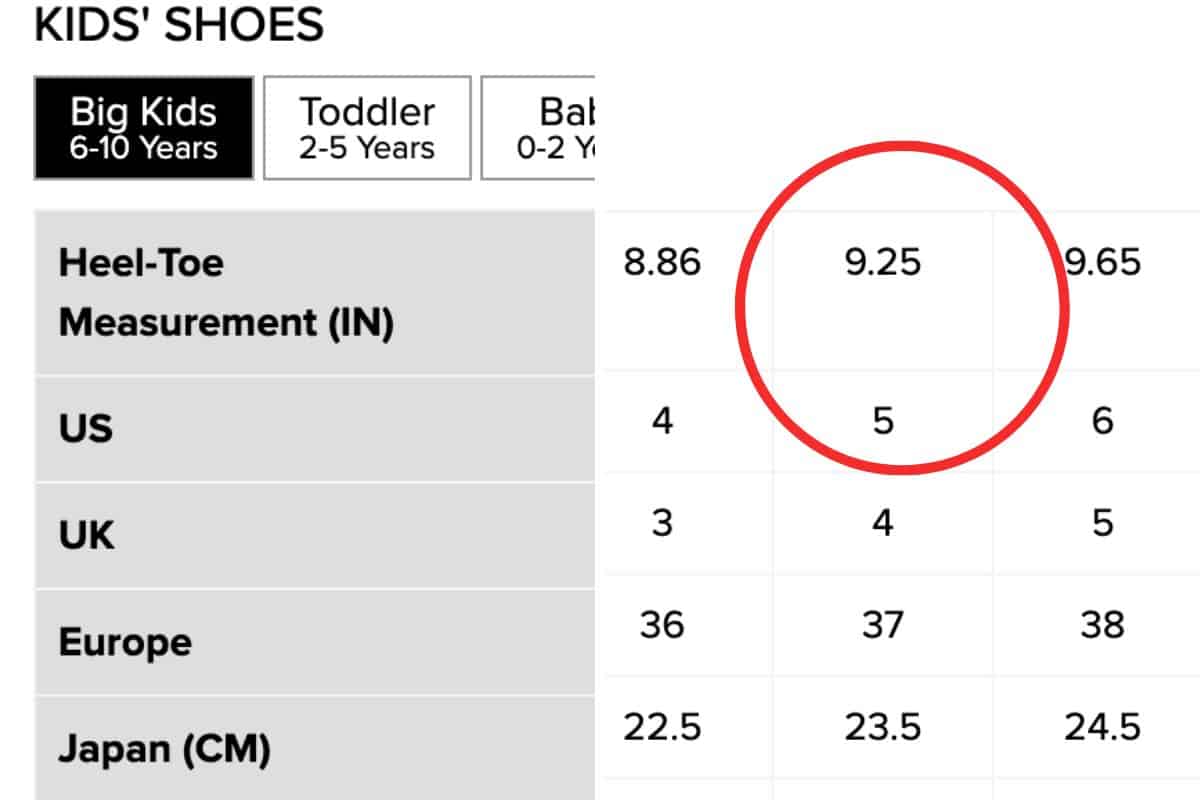
A youth-to-women’s conversion chart gives you a quick estimate when shopping for US shoes. A commonly used rule is to add about 1.5 sizes to the youth size to estimate the women’s equivalent. Some brands or models may align more closely with a 2-size difference, so treat the chart as a guide.
The table below uses the common 1.5-size conversion as a starting point. It is not a universal fit chart, and the listed matches should be checked against the manufacturer’s sizing information before buying.
Source: divinebeginningsboutique.com
Youth 3.5Y
Approximately women’s size 5.
Youth 4Y
Approximately women’s size 5.5.
Youth 4.5Y
Approximately women’s size 6.
Youth 5Y
Approximately women’s size 6.5.
Youth 5.5Y
Approximately women’s size 7.
Youth 6Y
Approximately women’s size 7.5.
Youth 6.5Y
Approximately women’s size 8.
Youth 7Y
Approximately women’s size 8.5.
How to Read the Conversion Chart
Look for the youth size printed on the shoe label or product page. Find that size in the first column of a brand’s conversion chart, then read across to the women’s size. If your youth size falls between two listed sizes, use the brand’s measurement guide rather than guessing.
The half-size steps matter. A 6Y and a 6.5Y are different sizes, even though the difference may look small on paper. If your foot is close to the upper limit of one size, the next half size may offer a more comfortable fit.
Check the Y label
Make sure the listed size is a youth size and not a women’s size with the same number.
Confirm the brand
Use the chart for the exact brand and model whenever it is available.
Check the fit
Length is only one part of comfort. Width, toe shape, and the shoe’s intended use also matter.
Why Some Charts Show a Two-Size Difference
US youth-to-women’s conversion charts do not all use the same offset. Some brands use a difference of about 1.5 sizes, while other charts or shoe models may lead shoppers to use a two-size difference as a rough estimate.
For example, youth size 6 may be listed near women’s 7.5 in one chart and women’s 8 in another. This does not automatically mean one chart is wrong. The manufacturer’s sizing system, the model, and the fit of the shoe can affect the recommended match.
Use one chart at a time
Do not mix the conversion rule from one brand with the measurement chart from another.
Check foot length
A measured foot length can help resolve uncertainty when two charts suggest different sizes.
How to Convert Big Kids Sizes to Women’s Sizes
You can estimate a women’s shoe size from a youth size with a simple calculation. Start with the youth size, add about 1.5, and compare the result with the brand’s size chart. This gives you a useful first estimate, but it does not replace checking the actual shoe measurements.
For example, if a sneaker is marked 5.5Y, adding 1.5 gives a women’s size 7. That is a common starting point for comparison. If the brand’s chart lists a different equivalent, follow the brand’s guidance and consider your measured foot length.
Source: stylearc.com
Step 1: Find your youth size
Read the size on the shoe label or product page. Confirm whether it is marked Y or listed under big kids.
Step 2: Add about 1.5 sizes
Use the common US conversion as an initial estimate, not a guaranteed match.
Step 3: Open the brand chart
Check the size chart for the exact shoe model. Some manufacturers use different conversion guidance.
Step 4: Compare foot length
Measure your foot in inches or centimeters and compare it with the brand’s foot-length range.
Step 5: Check the return policy
If you are ordering online and remain unsure, check whether you can exchange the shoes if the fit is wrong.
Example: Converting a 6Y Shoe to Women’s
Suppose you find a pair of youth sneakers in size 6Y. Using the common 1.5-size rule, the estimated women’s equivalent is 7.5. A chart that uses a two-size difference may point you toward women’s size 8 instead.
The best choice depends on the shoe’s actual sizing and your foot. Check the product page, compare the brand’s measurements, and consider whether the shoe has a narrow or roomy toe box. If possible, try both sizes before deciding.
Estimated match
Youth 6Y to women’s 7.5 using the 1.5-size rule.
Alternative estimate
Women’s size 8 may be worth checking if the manufacturer’s chart uses a two-size difference.
Final decision
Use the exact brand chart and fit checks instead of relying on the calculation alone.
How to Measure Your Feet at Home
A foot measurement helps when your usual size feels different across brands. Place a sheet of paper on a hard floor against a wall. Stand on the paper with your heel lightly touching the wall, then mark the end of your longest toe.
Measure from the wall-side heel point to the toe mark. Repeat the process for the other foot because one foot may be longer. Use the longer measurement when checking the manufacturer’s chart, and measure near the end of the day if your feet tend to swell during normal activity.
Wear normal socks
Use the type of socks you expect to wear with the shoes.
Stand while measuring
Standing helps account for the way your foot spreads under body weight.
Measure both feet
Use the longer foot as the main reference when selecting a size.
Compare with the right chart
Follow the brand’s instructions about foot length, shoe length, and recommended fit.
Are Big Kids Shoes the Same as Women’s Shoes?
Big kids shoes and women’s shoes can have similar lengths after conversion, but they are not always built the same way. A youth shoe may fit an adult foot well, yet another model in the same converted size may feel tight across the forefoot or too loose around the heel.
Shoe construction matters as much as the number on the label. The shape of the toe box, the width of the sole, the amount of cushioning, and the support built into the shoe can all affect comfort. These details vary by brand and model, so avoid assuming that every youth sneaker is a direct substitute for its adult version.
Source: storage.googleapis.com
Width and shape
A youth model may have a different fit around the toes or midfoot than a comparable women’s model.
Cushioning and support
The midsole, heel structure, and arch area may differ between models, even when the sizes appear equivalent.
Available widths
Some adult shoes come in multiple widths, while a youth version may offer fewer options.
Style and materials
Color choices, upper materials, and construction can differ between youth and adult versions of a shoe.
When Youth Shoes Can Work Well for Adults
Youth shoes can be a practical option for adults whose feet fit the available youth sizes. Casual sneakers, school-style shoes, and some everyday athletic models may offer a suitable fit when their shape and support match the wearer’s needs.
Compare the shoe’s specifications rather than choosing it only because the size conversion looks right. For long walks, running, sports, or extended standing, pay close attention to comfort, stability, and the support required for that activity.
Everyday wear
Consider youth shoes when the length, width, and shape feel comfortable during normal walking.
Casual sneakers
Check the same basic fit points as you would with an adult sneaker, including toe room and heel hold.
Sports and exercise
Choose a model designed for the activity and confirm that it provides a suitable fit and level of support.
When a Women’s Shoe May Be a Better Fit
A women’s model may be a better option if youth shoes feel too narrow, press on your toes, or lack the support you need. Adult shoes may also offer more choices in width and style, depending on the manufacturer.
Do not size up automatically to solve a width problem. A longer shoe can leave too much space in front of your toes while still pressing on the sides of your foot. Look for a suitable width or a different shoe shape instead.
Wide feet
Look for a model with enough forefoot room or an available wide-width option.
Special fit needs
Compare the shoe’s shape, cushioning, and support with the needs of your daily activity.
Persistent discomfort
Stop using a shoe that causes pain, numbness, or repeated rubbing. Try a better-fitting model.
How Brand Sizing Changes the Conversion
The same youth size may not fit the same way in every brand. Manufacturers can use different size charts, lasts, and shoe shapes. A last is the form used to shape a shoe, and its design affects how the shoe fits around the toes, arch, and heel.
Even within one brand, a running shoe may fit differently from a casual sneaker or a boot. Materials also matter. A flexible upper may feel less restrictive than a firm upper, while a thick lining can reduce the room inside a shoe.
Source: appaman.com
Brand size chart
Use the official chart for the exact model whenever it provides youth and women’s conversions.
Shoe type
Compare sneakers with sneakers and boots with boots when judging fit. Different styles may have different shapes.
Upper material
Leather, knit fabric, mesh, and synthetic materials can feel different around the foot.
Lining and socks
Thick linings or heavy socks can make a shoe feel tighter than a similar unlined model.
How to Compare Nike, Adidas, and Other Brands
If you are comparing youth and women’s sneakers from Nike, Adidas, or another footwear brand, open the official size guide for the model you want. Look for a table that lists foot length in inches or centimeters alongside the US size. A length-based chart is often more useful than relying on the youth-to-women’s size difference alone.
Do not assume that a conversion from one brand applies to another. A youth 6.5 in one model may feel different from a youth 6.5 in a different model, even when both are listed under US sizing. Reviews can help you spot reported fit issues, but your own measurements and the brand’s instructions should guide the final choice.
Nike
Check the official chart and product-specific fit notes before converting a youth size.
Adidas
Compare the listed foot length with your measurement and review any model-specific sizing advice.
Other brands
Use the manufacturer’s own chart rather than carrying over a conversion from a different label.
Common Mistakes When Converting Big Kids Sizes
The most common mistake is treating the conversion as an exact rule. A chart can point you toward the right range, but it cannot account for every foot shape or every shoe design. Use the conversion as your first check, then confirm the fit with measurements and the brand’s instructions.
Another common mistake is choosing a bigger size to gain width. This may make the shoe too long without fixing pressure along the sides. A different width or a roomier model may be a better answer.
A half-size difference can matter when your foot measurement falls close to a size boundary.
Assuming both feet match
Measure each foot and use the longer one as the main guide.
Buying by age or clothing size
Shoe size depends on foot measurements, not age, height, or clothing size.
Skipping the return policy
Review exchange terms before ordering when you cannot try on the shoe in person.
Signs That Your Converted Shoe Size Is Wrong
A shoe may be too small if your toes press against the front, the sides squeeze your forefoot, or your toes cannot move comfortably. A shoe may be too large if your heel slips repeatedly, your foot slides forward, or you need to tighten the laces excessively to hold it in place.
Try the shoes on both feet while standing. Walk on a safe, level surface and check for rubbing or pressure. A good fit should feel secure without painful squeezing, and your toes should have enough room to move naturally.
Too short
Your longest toe touches the front or feels pressed when you stand or walk.
Too narrow
The sides squeeze your foot or create painful pressure points.
Too long or loose
Your heel slips or your foot moves around despite a normal lace adjustment.
Poor support
The shoe feels unstable or causes discomfort during the activity for which it is intended.
Should You Buy Big Kids Shoes Instead of Women’s Shoes?
Buying youth shoes can make sense when the fit is right, the model suits your activity, and the price or available style works for you. However, the converted size alone is not enough to decide. Compare the construction, fit, and return options before choosing between a youth and women’s version.
A lower price, if one is offered, does not guarantee better value. A shoe that causes rubbing or lacks suitable support may not serve you well, even if the size conversion appears correct. Choose the pair that fits your foot and intended use.
Source: ar.inspiredpencil.com
Compare total cost
Check the actual price, shipping fees, and exchange costs rather than assuming youth shoes are always cheaper.
Check the activity
Make sure the shoe is designed for walking, running, school, work, or the sport you plan to use it for.
Look at width options
Choose a model that fits your foot without squeezing or leaving excessive space.
Review the exchange policy
Keep the option to exchange in mind if you are uncertain about the converted size.
A Simple Decision Guide
Start with your measured foot length and the brand’s chart. If the youth size falls within the recommended range and the shoe feels secure, the youth version may work. If the toe box feels tight, your heel slips, or the model does not offer the support you need, compare the women’s version or another shoe shape.
For daily exercise or long periods on your feet, prioritize a comfortable, activity-appropriate fit over a numerical match. Persistent foot pain or unusual symptoms should not be solved by guessing at shoe sizes; consider advice from a qualified health professional when needed.
Choose youth sizing
When the size chart matches your foot and the model feels comfortable for your planned use.
Choose women’s sizing
When the adult model offers a better width, shape, support level, or fit.
Try another model
When neither size gives enough toe room and a secure heel fit at the same time.
Big Kids Shoe Sizes Compared With Women’s Clothing Sizes
Big kids shoe sizes and women’s clothing sizes are separate systems. A youth shoe size cannot be converted into a women’s pants, shirt, dress, or underwear size. Footwear charts measure the foot or shoe, while clothing charts use measurements such as the bust, waist, and hips.
This distinction matters when a search uses the phrase big kids size in women’s. Most people asking about this phrase want a shoe conversion, but the word size can also refer to clothes. Check whether the product page says shoes, sneakers, boots, clothing, or apparel before using a chart.
Source: storage.googleapis.com
Shoes
Compare US youth sizes with US women’s shoe sizes, then check foot length and width.
Pants and jeans
Use the garment’s waist, hip, and inseam measurements. Youth clothing sizes do not follow the shoe-size conversion rule.
Tops and dresses
Use bust, waist, and hip measurements along with the retailer’s fit chart.
Underwear
Follow the garment maker’s waist, hip, or body measurement guide rather than a footwear chart.
What If the Product Page Only Says Size 6?
Do not assume that size 6 means youth 6Y or women’s 6. Look for a category label, a Y marking, or a size chart. If the listing does not make the sizing system clear, contact the seller before ordering.
This check is especially useful on resale sites and general marketplaces, where product titles may leave out important sizing details. A quick confirmation can help avoid an exchange or a pair that does not fit.
Check the product category
Confirm that the listing is for footwear rather than clothing.
Read the full label
Look for Y, youth, big kids, women’s, or another sizing marker.
Ask the seller
Request the manufacturer’s size chart or foot-length measurement if the label remains unclear.
How to Get the Best Fit When Shopping Online
Online shoe shopping works best when you compare measurements before placing an order. Start with the exact product model, read the brand’s sizing advice, and check whether the listed sizes are US youth or US women’s. A conversion chart is useful, but the product’s own guidance should take priority.
Read customer reviews for repeated comments about length or width, but treat those comments as individual experiences rather than a guaranteed result. People have different foot shapes, and one shopper’s ideal size may not work for another.
Source: storage.googleapis.com
Save your measurements
Keep a record of both foot lengths in inches or centimeters and update them when needed.
Read fit notes
Look for clear information about whether the model runs small, large, narrow, or wide.
Check return conditions
Confirm the deadline, cost, and condition required for a return or exchange.
Try shoes indoors first
When the seller’s policy allows it, test the fit on a clean indoor surface before wearing the shoes outside.
What to Do When Two Sizes Both Seem Possible
If your measurement falls between sizes, use the manufacturer’s guidance for that model. Some shoes offer more room in the toe box than others, and some materials have more flexibility. Do not assume that going up half a size will solve every fit problem.
If both sizes are available and returns are permitted, trying them on side by side can help. Wear the socks you expect to use, stand up, and walk a few steps. Choose the pair that holds your heel, gives your toes room, and feels comfortable without excessive pressure.
Compare toe room
Your longest toe should not be forced against the front of the shoe.
Check the heel
The shoe should hold your heel securely without painful rubbing.
Test both feet
A shoe that fits one foot well may feel tight on the other.
Frequently Asked Questions
Q
What is a big kids size 6 in women’s shoes?
A US youth size 6 often converts to about a women’s size 7.5 when using a 1.5-size difference. Some brand charts may point to women’s size 8. Check the exact model’s chart and compare your foot length before buying.
Q
What is a 7Y in women’s shoe sizes?
A US youth size 7Y is often close to a women’s size 8.5 using the common 1.5-size conversion. The equivalent can vary by brand, so confirm the manufacturer’s chart rather than treating this as an exact match.
Q
Is a 6.5Y the same as a women’s size 8?
A 6.5Y often corresponds to a women’s size 8 under the common US conversion rule. The fit may still differ because shoe shape, width, and construction vary by model.
Q
Can adults wear big kids shoes?
Yes. Adults can wear big kids shoes when the available size and shape fit their feet. Check toe room, width, heel hold, and support, especially for running, sports, or long periods of walking.
Q
Are big kids shoes narrower than women’s shoes?
Not always, but youth and women’s shoes can differ in width and shape. The result depends on the brand and model. If a youth shoe squeezes the sides of your foot, look for a roomier design or an adult model with a suitable width.
Q
How do I know if I need a half size bigger?
Check whether your toes feel cramped, your longest toe touches the front, or the shoe becomes uncomfortable when you stand. Compare your measured foot length with the brand’s chart. If the shoe is too narrow, moving up in length may not fix the problem.
✦ Wrapping Up
Conclusion
Finding the right big kids size in women’s shoes starts with a simple conversion. A common US rule adds about 1.5 sizes to the youth size, so 6.5Y often lines up with women’s size 8. Some brands use different guidance, which is why the conversion should be treated as an estimate.
The best fit comes from checking the exact shoe model, measuring both feet, and comparing the results with the manufacturer’s chart. Pay attention to toe room, width, heel hold, and support instead of choosing by the number alone. Youth shoes can work well for many adults, but comfort and fit should decide the final choice.
💡 Key Takeaway
Measure both feet, find your US youth size, add about 1.5 sizes for a first estimate, and confirm the match with the shoe brand’s official chart before ordering.