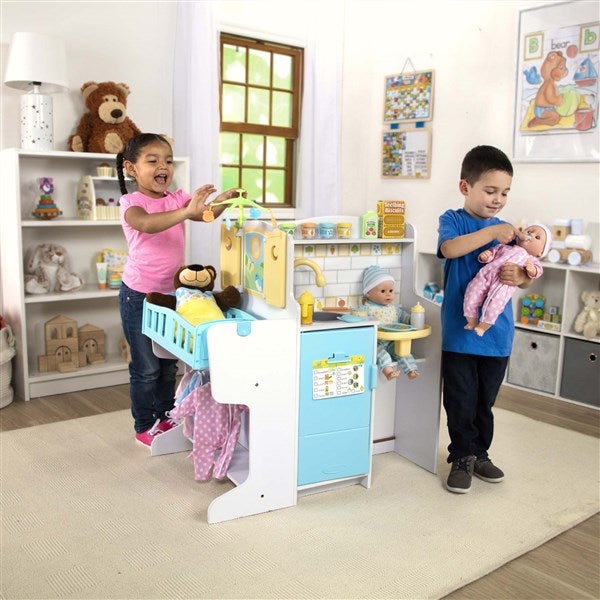
The Melissa & Doug Mine to Love Baby Care Activity Center is a wooden pretend-play station where children can feed, bathe, change, and settle their baby dolls. It is made for children ages 3 and up, and its many play areas give kids several ways to care for a doll in one spot.
For families in the United States looking for a larger birthday or holiday gift, the Melissa and Doug baby care center offers more than a small doll bed or feeding set. It combines a pretend kitchen, a bathing and changing area, and a nursery in one piece of play furniture. Children can move between these areas as they make up stories about daily baby care.
The product is part of the Mine to Love range. The official product description lists a wooden structure, several built-in features, and space for dolls or stuffed animals about 15 to 18 inches tall. Dolls and stuffed animals are not included, so parents should check what they already own before buying. This guide covers the features, age fit, assembly, play ideas, and checks to make before ordering.
The Melissa & Doug Mine to Love Baby Care Activity Center is a play station for children who enjoy caring for dolls. Instead of buying separate pieces of toy furniture for every task, a child gets a kitchen, a bathing and changing space, and a small nursery in one unit. Each area supports a different part of a pretend daily routine.
The design is based on familiar parts of caring for a baby. A child can pretend to prepare a meal, give a doll a bath, change its diaper, put away clothes, and settle it into a cradle. These actions can help children build their own stories and copy routines they have seen at home or in books.
The official product listing identifies the item as model 31701. It is a wooden, multi-purpose toy rather than a real baby care product. Its sinks, bath area, changing surface, and other details are for pretend play only and must never be used to care for a real infant.
Source: image.makewebcdn.com
Product type
A multi-area doll care station made for imaginative play with baby dolls and stuffed animals.
Recommended age
The manufacturer’s listing says ages 3 and up. Follow the age label and all current product safety instructions.
Doll size
The center is designed for dolls and stuffed animals about 15 to 18 inches tall. Check the size of your child’s favorite doll before buying.
Power needs
The product listing says batteries are not required.
Who Is This Toy Made For?
This center is aimed at children who enjoy pretend family play, dollhouses, and role-play toys. It may suit a preschooler who likes to copy everyday routines or create stories about a doll’s day. A child who already spends time dressing, feeding, and putting dolls to bed may get more use from it than a child who rarely plays with dolls.
Interests matter more than a gift trend. Some children prefer blocks, cars, art, or outdoor play. The best reason to choose this center is that the child already enjoys doll care or has shown interest in it.
A likely fit
Children who enjoy dolls, pretend kitchens, nursery furniture, and role-play stories.
A less certain fit
Children who prefer small, portable toys or have little interest in doll play.
Features and Play Areas
The main draw is the number of pretend-care tasks built into the center. A child can shift from feeding a doll to washing it, changing it, or putting it down for a rest. This gives play a simple structure without forcing every session to follow the same story.
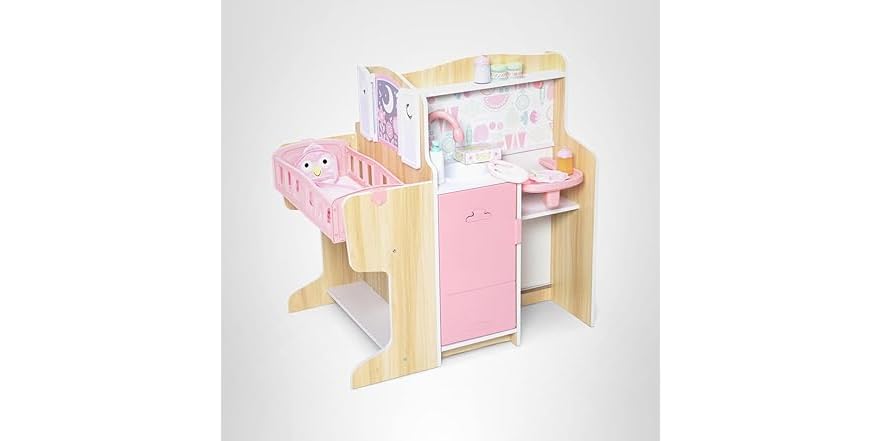
The manufacturer describes three main zones: a kitchen, a bathing and changing area, and a nursery. Each zone has small details that can help a child invent new activities. The exact contents should be checked against the current listing and product packaging, especially when buying a used or open-box unit.
Source: target.scene7.com
Kitchen area
Includes a refrigerator, sink, and high chair for pretend meals and feeding routines.
Bathing and changing area
Includes a bathtub with a spray nozzle, a flip-down changing mat, a mirror, a wipes dispenser, a diaper disposal chute, and a washing machine with a clicking dial.
Nursery area
Includes a rocking cradle, clothing storage, and a shuttered window with a reversible day-and-night scene card.
The pretend kitchen lets children act out a simple meal routine. They can place a doll in the high chair, pretend to prepare food, and move on to the next part of the story. An adult can join in by asking what the doll wants to eat or whether it is time to clean up.
These stories do not need a right answer. The point is to let children make choices, use language, and build a sequence of events. Parents can offer a few ideas without taking control of the play.
Try a meal story
Ask the child to pretend to serve breakfast, wipe the doll’s face, and get the doll ready for the next activity.
What the Bath and Changing Zone Adds
The bath and changing zone adds more steps to the play routine. A child can pretend to wash a doll, use the changing mat, and put away the care items. Small actions such as opening, closing, and turning toy parts can also keep little hands busy.
Keep the play dry unless the product instructions clearly allow otherwise. A pretend bathtub is not a real water-play basin, and adding water without checking the care guidance could damage the toy or create a mess.
Try a bath routine
Have the child pretend to wash the doll, dry it with a toy towel if available, and prepare it for bed.
Why the Nursery Matters
The nursery gives the child a place to finish a story. After a pretend meal and bath, the doll can go into the cradle while the child changes the day-and-night scene card. Clothing storage can also become part of a simple tidy-up game.
A familiar order can help children link actions in a story. They can still change the order, add new characters, or decide that the doll is not ready for bed yet.
Try a bedtime story
Ask the child to put away the doll’s clothes, settle the doll in the cradle, and choose whether it is day or night.
Size, Space, and Assembly
This is a larger toy station, not a small accessory that can be tucked into a drawer after every play session. Before buying, measure the floor space where it will stand and leave room for a child to move around it. Also think about how the toy will fit beside other play furniture in the room.
The official listing gives product dimensions of about 35.6 by 25.5 by 6.6 inches. Check the manufacturer’s current dimension diagram to confirm which figures refer to the assembled product, and do not use the package dimensions as a substitute for the space needed during play. A retailer may show dimensions in a different order.
Source: i.pinimg.com
Measure the play area
Check the planned spot and the room needed for the child to stand, reach, and move around the center.
Plan for assembly
The manufacturer’s listing includes assembly instructions and says a Phillips head screwdriver is needed. The screwdriver is not included.
Sort the parts first
Before assembly, lay out the parts and hardware and compare them with the instructions.
Use the right surface
Set the assembled center on a level floor and follow the instructions for safe placement and use.
Assembly Tips for Parents
Set aside time to build the center before giving it as a gift. Read all the instructions first, use the correct screwdriver, and avoid tightening parts in a way the manual does not direct. Keep loose screws and small hardware away from children during assembly.
After building it, check that all parts are attached as instructed. Look for loose fittings, sharp edges, cracked pieces, or parts that do not move as expected. Do not let a child play with the center until any assembly concern has been fixed.
Keep hardware out of reach
Small assembly pieces can pose a choking risk for young children.
Do not guess at missing steps
Use the official instructions or contact the seller or manufacturer if a part or step is unclear.
What Comes in the Box?
The large wooden center and its built-in features are the main parts of the product. Dolls and stuffed animals are not included, according to the manufacturer. That detail can change the real cost of the gift if the child does not already have a doll that fits.
Some retailer listings show a care center together with additional baby-care accessories. Do not assume that every listing includes the same extras. Compare the exact product title, model number, included-parts list, and product photos before you pay.
Source: personalizationmall.com
Included built-in features
The kitchen, bathing and changing area, and nursery are part of the center.
Not included
The manufacturer states that dolls and stuffed animals are sold separately.
Accessories
Check the exact seller’s list for any loose pretend-care items. Do not rely on a photo alone to confirm what ships.
Choose a Doll That Fits
The listed size range is about 15 to 18 inches tall. Measure the doll from head to foot and consider its shape as well as its height. A doll with a wide body or bulky clothing may fit differently from a slim doll of the same height.
If your child already owns a Mine to Love doll, check its exact model and size before ordering. If the doll is from another brand, compare measurements and ask the seller if fit is uncertain. A good fit helps the child use the different play areas without frustration.
Check height
Compare the doll’s stated or measured height with the center’s recommended range.
Check body width
Think about whether the doll can sit in the high chair or lie in the cradle.
Learning and Social Benefits of Pretend Play
Pretend doll care can give children a way to act out daily routines and explore feelings. A child may comfort a doll, offer it food, or decide that it needs rest. These small stories let children practice words and actions in a low-pressure setting.
The center can also support fine motor practice through actions such as turning a dial, opening a door, moving a scene card, or handling clothing. The amount of practice depends on how the child uses the toy, so these benefits should be viewed as possible outcomes of play rather than guaranteed developmental results.
Source: m.media-amazon.com
Language
Children can name objects, describe actions, and tell a story about what happens next.
Sequencing
A pretend routine can help a child practice putting events in an order, such as feeding, bathing, and resting.
Empathy
Caring for a doll gives children a chance to act out comfort and kindness.
Fine motor practice
Moving small toy features can give children practice using their hands and fingers.
Shared play
A parent, sibling, or friend can take a role in the story and help the child practice turn-taking.
Simple Activities to Try at Home
You do not need a printed lesson plan to make the center useful. Let the child choose the story and add a small prompt when play slows down. The aim is to keep the activity fun rather than turn it into a test.
For shared play, take turns choosing the next step. One person can pretend to prepare a meal while another gets the doll ready for a nap. Children can also invent a story about a doll visiting a friend or getting ready for a trip.
Morning routine
Pretend to wake the doll, choose clothes, and prepare breakfast.
Bath and bedtime
Act out a pretend bath, drying off, changing clothes, and settling the doll in the cradle.
Laundry day
Sort doll clothes and pretend to wash and store them.
Day and night
Use the reversible scene card to make up a story about what the doll does during the day or at night.
Safety and Care Tips
Use the baby care center only as a pretend-play toy and follow the manufacturer’s age label and instructions. The listed minimum age is 3 years. Keep it away from babies and younger toddlers who may mouth small parts or reach loose hardware.
Check the center from time to time, especially after moving it or if a child plays roughly. Look for loose parts, damage, unstable placement, or features that no longer work as intended. Stop using the toy if you find a problem that could hurt a child, and contact the manufacturer or seller for advice.
Source: images-na.ssl-images-amazon.com
Follow age guidance
Do not treat the toy’s intended use as suitable for children below the stated age.
Keep it dry
The bathtub is a pretend feature. Avoid pouring real water into it unless the current product instructions clearly allow this.
Check moving parts
Inspect doors, dials, the changing mat, and other features for damage or loose fittings.
Use adult supervision
Supervise play as appropriate for the child’s age, abilities, and the condition of the toy.
Keep the floor clear
Place the center where children can move safely without tripping over nearby toys or furniture.
Cleaning the Center
For routine care, follow the cleaning directions supplied with the product. If the instructions allow wiping, use a soft cloth that is only slightly damp, then dry the surface. Do not soak the wooden parts or use harsh cleaners unless the manufacturer says they are suitable.
If the toy gets wet, stop play and check the care instructions before using it again. Moisture may affect wood, finishes, or moving parts. Never assume that a wooden toy can be submerged just because it has a pretend bathtub.
Use gentle care
Follow the official care directions and avoid soaking the wood.
Check after cleaning
Make sure surfaces are dry and all parts remain secure before play resumes.
Price, Availability, and Buying Checks
The cost of this center can be higher than that of a single doll accessory because it combines several play areas in one large item. The manufacturer’s listing showed a price of $279.99 when checked for this guide, but prices and stock can change. Treat that figure as a dated reference, not a guaranteed current offer.
Retailer listings may differ in price, shipping, included accessories, and return terms. A product can also appear on a store page while being out of stock. Check the final checkout page and the seller’s current terms before making a decision.
Source: thingsremembered.com
Confirm stock
Check whether the seller can ship the item to your address now.
Compare total cost
Include shipping, taxes, and any doll or accessories you still need to buy.
Read the return policy
Check the time limit, packaging rules, and any return shipping fees before ordering.
Check delivery access
Because this is a large toy, consider package size, delivery method, and where you will assemble it.
Is a Used Baby Care Center Worth Considering?
A secondhand center may cost less, but it needs a closer check. Ask for clear photos of all sides, the play features, and the hardware. Find out whether the original assembly instructions are available and whether any parts have been repaired or replaced.
Do not buy a unit with cracked wood, missing structural pieces, loose fittings, sharp edges, or an unstable base. Ask the seller to confirm the model number so you can compare the item with the correct product information. A low price is not worth a damaged or incomplete toy.
Check completeness
Compare the parts with the product instructions and ask about missing hardware.
Inspect condition
Look for damage, swelling from moisture, peeling finishes, and loose moving parts.
Consider transport
Measure your vehicle or delivery space before arranging pickup.
Melissa and Doug Baby Care Center Compared With Smaller Toys
The best choice depends on how much space you have, what the child already owns, and how often they play with dolls. The full center offers several activity areas in one unit, while a smaller set is easier to store and may cost less. Neither option is automatically better for every family.
Use the table below to compare the types of play rather than relying on price alone. Actual prices and included items vary by model and seller, so check the current product details before comparing offers.
Choose the full center
Consider it if the child loves doll care, has room for a larger toy, and will use several built-in areas.
Choose a small care set
Consider it if you want a lower-commitment gift with fewer pieces and easier storage.
Choose separate furniture
Consider a doll bed, high chair, or changing set if the child already has a play space and needs only one missing feature.
A Simple Decision Table
Compare the main trade-offs before choosing. This table describes common product types, not guaranteed features of every toy sold in a category.
All-in-one care center
Offers multiple play areas in one unit, but needs more floor space and assembly.
Small baby-care set
Usually easier to store and carry, but may not include furniture or a full nursery area.
Single doll accessory
Can fill a specific need at a lower total cost, but offers fewer built-in play options.
Frequently Asked Questions
Q
What age is the Melissa and Doug Baby Care Center for?
The official product listing recommends the Mine to Love Baby Care Activity Center for children ages 3 and up. Always follow the age label and current safety instructions. Keep assembly hardware and any small accessories away from younger children.
Q
Does the Melissa and Doug Baby Care Center come with a doll?
No. The manufacturer’s description says dolls and stuffed animals are not included. The center is designed for dolls and plush toys about 15 to 18 inches tall, so check the size of a doll you already own or include a suitable doll in your gift budget.
Q
Does the Baby Care Activity Center need batteries?
The official listing says batteries are not required. The center has pretend-play features, including a washing machine dial that clicks, but you should check the current product description if buying a different model or a used unit.
Q
How much space does the center need?
The official listing gives dimensions of about 35.6 by 25.5 by 6.6 inches. Check the current manufacturer’s dimension diagram to confirm the assembled size and leave extra room for a child to stand, reach, and move around the toy.
Q
Is the bathtub meant for real water?
Treat the bathtub as a pretend-play feature unless the current instructions clearly say otherwise. Do not fill it with water based on its appearance alone. Water may damage wooden parts or finishes and may affect how the toy works.
Q
Is the Melissa and Doug Baby Care Center worth the price?
It may be worth considering if a child often plays with dolls, will use several care areas, and has enough space for a large toy. A smaller care set or separate doll furniture may be a better fit for families with limited space or a tighter budget. Compare the current price, shipping, included items, and return terms before buying.
✦ Wrapping Up
Conclusion
The Melissa and Doug Mine to Love Baby Care Activity Center brings a pretend kitchen, bath and changing area, and nursery together in one wooden play station. Its range of built-in features gives children who enjoy doll play several ways to build stories around feeding, washing, changing, and bedtime. The listed age recommendation is 3 years and up, and dolls are sold separately.
The main trade-offs are size, assembly, and cost. Measure your space, check the doll’s fit, and confirm the exact contents and current stock before ordering. If the child already loves doll-care routines and has room for a large play station, this center may be a suitable gift. If not, a smaller set may meet the same play needs with less space and expense.
💡 Key Takeaway
Before buying, check the current official product listing for model 31701, confirm the dimensions and included parts, measure the space in your home, and make sure the child has a suitable 15- to 18-inch doll.