A US big kids size 6 is usually about a women’s US size 7.5 to 8, depending on the brand and shoe style. A common starting point is to add 1.5 to the kids size, making kids size 6 about women’s size 7.5.
In the United States, shoe shopping can get confusing when a store lists youth sizes beside women’s sizes. The numbers do not always match, even when the shoes look much alike. If you wear women’s size 7.5, a big kids size 6 may be worth trying.
The usual conversion rule adds about 1.5 sizes to a US big kids size to estimate the matching women’s size. Still, this is a guide, not a fixed rule for every shoe. Brand charts, toe shape, foot width, and the way a shoe is made can change the fit.
Before you buy, check the brand’s own size chart and measure both feet. This small step can help you avoid shoes that pinch at the toes or slip at the heel. It is useful for sneakers, casual shoes, and many everyday styles sold in US stores.
A US big kids size 6 is commonly close to a women’s US size 7.5. Some conversion charts or shoe models may point you toward women’s size 8 instead. Use size 7.5 as a starting point, then check the maker’s chart before buying.
The term kids size 6 usually means a big kids or youth size, not a toddler size. This matters because shoe size systems have different ranges for babies, toddlers, little kids, and big kids. A youth size 6 is much larger than a toddler size 6.
Women’s and youth shoes may share similar length sizing, but the shape and fit can differ. A women’s shoe may have a different heel shape, arch design, or width. Two shoes with the same estimated fit can still feel different on your feet.
Source: narodnatribuna.info
Common conversion
US big kids size 6 is about women’s US size 7.5 using the common plus-1.5 rule.
Possible variation
A women’s size 8 may fit better in some brands or styles. Confirm the model’s chart and fit notes.
Best next step
Measure your foot length and compare it with the brand’s US sizing guide.
Does Kids Size 6 Mean Youth Size 6?
In most US shoe listings, big kids size 6 and youth size 6 refer to the same general size category. Retailers may use terms such as big kids, youth, or grade school. These labels usually describe shoes for older children, including styles that some adults can wear.
Check the product label
Look for Big Kids, Youth, or Grade School in the size selector so you do not choose a toddler or little kids size by mistake.
Kids to Women’s Shoe Size Conversion Chart
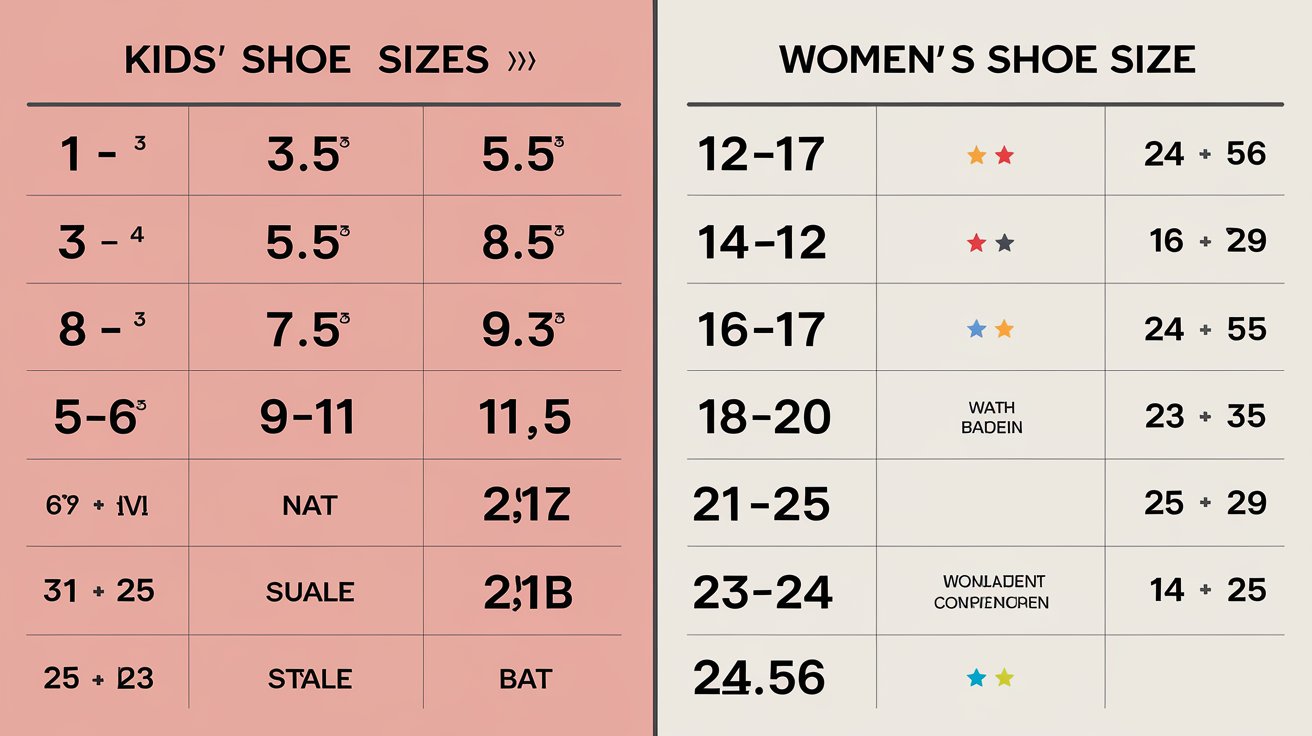
A conversion chart helps you estimate the women’s size that may match a US big kids size. The table below uses the common rule of adding 1.5 sizes to the youth size. These are estimates, not a guarantee of an exact fit across brands.
Use the chart as a first check when shopping for sneakers, walking shoes, or casual footwear. If your usual women’s size falls between two options, compare the listed foot length and read the shoe’s fit guidance. The size printed on the box is only one part of the fit.
Source: allconversioncharts.com
How to read the chart
Find the big kids size in the first column, then use the estimated women’s size in the second column as a starting point.
Common US Big Kids to Women’s Conversions
The following table shows the typical plus-1.5 conversion. It is intended for general US sizing and may not match every brand’s official chart.
Kids 3
About women’s 4.5.
Kids 4
About women’s 5.5.
Kids 5
About women’s 6.5.
Kids 6
About women’s 7.5.
Kids 7
About women’s 8.5.
Why Some Charts Show a Different Size
Not every brand uses the same conversion method or shoe shape. Some charts focus on foot length, while others show an estimated match between adult and youth sizes. A chart may also round values or list only whole sizes. That is why a kids size 6 may be shown as close to women’s 7.5 on one chart and women’s 8 on another.
Brand-specific sizing
Use the chart for the exact brand and model whenever it is available.
Half sizes
A half-size option may offer a closer fit than choosing the next whole size.
How to Check Whether a Kids Size 6 Will Fit
The best way to check your size is to measure your feet and compare the result with the shoe brand’s chart. This is more reliable than assuming that every kids size 6 has the same inner length. Shoe shape and width can affect comfort even when the size number seems right.
Measure both feet later in the day if you can. Feet may swell a little during daily activity, and one foot may be longer than the other. Use the larger foot when choosing a size, then check whether the shoe also gives enough room across the toes.
Source: psengine.co.uk
What you need
A sheet of paper, a pencil, a ruler or tape measure, and the socks you plan to wear with the shoes.
What to check
Foot length, foot width, toe room, heel hold, and the brand’s size chart.
Step 1: Measure Your Foot Length
Place a sheet of paper on a hard, level floor with one edge against a wall. Stand on the paper with your heel lightly touching the wall. Keep your weight balanced as you stand in a natural position.
Mark the end of your longest toe, then step off the paper. Measure from the paper’s wall edge to the toe mark. Repeat for the other foot and use the longer measurement when checking the brand’s chart.
Measure in the right units
Record your length in inches or centimeters, then use the same unit shown on the brand chart.
Step 2: Check the Brand’s Size Chart
Open the official size chart for the shoe you want. Find the foot length that matches your measurement, and check whether the chart uses women‘s sizes, big kids sizes, or both. Do not assume that a size chart from one brand applies to another.
If your measurement falls between two sizes, read the brand’s fit advice. The better choice can depend on whether the shoe runs narrow, has a roomy toe box, or is designed for a snug fit.
If your feet are wide
Look for width options or a model with enough room across the forefoot. Going longer may not solve a width problem.
Step 3: Check the Fit When You Try Them On
Try both shoes on with the socks you expect to wear. Stand, walk, and turn as you normally would. Your toes should have room to move, and your heel should stay in place without sharp pressure or repeated slipping.
A shoe that feels tight across the toes or causes pain is not a good fit just because the size conversion looks right. Try another size or shape instead. For online orders, review the return policy before removing tags or wearing the shoes outdoors.
Good fit
Your toes can move, your heel feels secure, and the shoe does not pinch or rub during normal walking.
Poor fit
Your toes press against the front, the sides squeeze your foot, or the heel slips with each step.
Why Adults Sometimes Buy Big Kids Shoes
Adults with smaller feet may find that big kids shoes offer a useful alternative to women’s sizes. Many athletic brands sell youth versions of popular sneaker styles, so shoppers may find a suitable design in either size range. The actual selection depends on the brand, model, color, and store.
The main benefit is having another size range to compare. Still, a youth shoe is not automatically the same as its women’s counterpart. Materials, cushioning, support, width, and construction can vary by model, so check the details rather than relying on appearance alone.
Source: rookiekids.com
More size options
Youth sizing can help shoppers with smaller feet find shoes that fit their measured foot length.
Different models
A youth version may have different materials or design details from a similarly named adult shoe.
Compare the total value
Check the actual price, fit, comfort, and return terms instead of assuming youth shoes always cost less.
Are Kids Shoes the Same as Women’s Shoes?
No, not in every case. A youth size may be close in length to a women’s size, but that does not mean the shoes are identical. Their shape, cushioning, upper materials, and support features can differ.
For everyday wear, the best choice is the shoe that fits your foot and suits the activity. For running, court sports, or long walks, consider the shoe’s intended use and fit as well as its size label.
For casual wear
Compare comfort, width, and toe room across both size ranges.
For sports
Check the model’s intended activity, fit, and support features before choosing a youth version.
Common Shoe Size Conversion Mistakes
The most common mistake is treating a size conversion as an exact match. The plus-1.5 rule is a handy estimate for US big kids and women’s sizing, but individual brand charts may differ. Foot shape and shoe design also affect the result.
Another mistake is mixing US, UK, and European size labels. A US youth size 6 is not the same as a UK size 6 or an EU size 6. Check the sizing system printed on the listing before you compare numbers.
Source: storage.googleapis.com
Mistake: choosing by number alone
Correction: compare foot length with the maker’s chart and consider width.
Mistake: confusing youth and toddler sizing
Correction: confirm that the listing says big kids, youth, or grade school.
Mistake: ignoring shoe purpose
Correction: fit running shoes, dress shoes, and casual sneakers according to their design and intended use.
Mistake: sizing up to fix tight width
Correction: look for a wider fit or a different shoe shape if the length is already right.
What If Women’s Size 7.5 Feels Too Small?
First, check where the shoe feels tight. If your toes touch the front, you may need more length. If the sides squeeze your foot while the length feels right, the shoe may be too narrow. Try the next size or a wider model based on the problem you feel.
Do not keep a shoe that causes pain in the hope that it will stretch enough. Some materials soften with wear, but that does not make a poor fit safe or comfortable. A different size or shape is often the better answer.
Pressure at the toe
Compare the next half size and check the toe box shape.
Pressure at the sides
Check width options or try a roomier model.
Heel slipping
Try a better-fitting heel shape or lacing adjustment before choosing a longer size.
How to Choose Between Kids Size 6 and Women’s Size 7.5
Start with your current shoe size, but do not let it make the choice for you. If women’s size 7.5 fits well in the same brand and type of shoe, youth size 6 is a reasonable size to compare. If you are buying a different brand or model, use the official chart and foot measurement instead.
The shoe’s purpose matters too. A casual sneaker may feel comfortable with a little more room, while a shoe designed for sports needs a secure fit that suits the activity. Never choose a smaller size just because it looks neater if your toes feel cramped.
Source: size-charts.com
You already wear women’s 7.5
Try big kids 6 as a starting point, then check the exact model’s chart and fit.
You wear women’s 8
Youth size 6 may feel short in some models. Compare foot length and consider the next youth size if the chart supports it.
You are between sizes
Use the brand’s measurement guide, then compare the available half sizes and width options.
You have wide feet
Focus on width and toe-box space rather than increasing length without checking the fit.
A Simple Example
Suppose you usually wear women’s US size 7.5 in casual sneakers. You find a youth sneaker listed in big kids size 6. The common conversion suggests that the youth shoe may fit, but you still need to compare its size chart and try it on if possible.
If the shoe feels secure and gives your toes room, the size may be right. If your toes press against the front, try a longer size. If the sides pinch, check for a wider fit or another model.
The useful rule
Use the conversion to narrow your options, then use measurement and fit to make the final choice.
Frequently Asked Questions
Q
What size is a kids 6 in women’s shoes?
A US big kids size 6 is commonly about a women’s US size 7.5. Some brands or models may fit closer to women’s size 8, so use the brand’s official chart before ordering.
Q
Is a youth size 6 the same as a big kids size 6?
Usually, yes. US shoe listings often use youth and big kids for the same general size range. Check the product label to make sure it is not a toddler or little kids size.
Q
Can adults wear big kids size 6 shoes?
Yes, if the shoe fits their feet and suits their needs. Adults should check length, width, comfort, and the shoe’s intended use rather than relying only on the size number.
Q
Should I size up from kids 6 to women’s 8?
Not automatically. Women’s size 8 may work in some shoes, but the right size depends on your foot measurement and the model’s chart. Compare both sizes when possible and choose the one that feels secure without pinching.
Q
Does the kids-to-women’s conversion work for every brand?
No. The common plus-1.5 rule is an estimate, and brands can differ in fit and sizing charts. Check the exact shoe model’s chart, especially when buying online or choosing a shoe for sports.
✦ Wrapping Up
Conclusion
A US big kids size 6 is usually close to a women’s US size 7.5. That makes it a useful starting point when comparing youth sneakers and adult shoes. Some models may fit more like a women’s size 8, so the conversion should not replace a proper fit check.
Measure both feet, compare the larger measurement with the brand’s chart, and check the shoe’s width and toe room. A good fit should feel secure without pain or pressure. The right size is the one that fits your feet, not just the one that matches a conversion chart.
💡 Key Takeaway
Start by comparing big kids size 6 with women’s size 7.5. Before you buy, measure your feet and check the official size chart for the exact shoe.